
First Coding Language Selector
What is your primary goal?
Select one option that matches what you want to build.
Select a goal above to see your personalized recommendation.
There is a myth that you need to be a math genius or a computer science graduate to start writing code. That simply isn't true anymore. If you are looking at coding classes or trying to teach yourself, the biggest hurdle isn't intelligence-it's choosing the right starting point. Picking the wrong language can turn an exciting hobby into a frustrating chore within two weeks.
The question "Which coding is best for beginners?" doesn't have a single answer because it depends on what you want to build. Do you want to create websites? Analyze data? Build mobile apps? Each goal has a natural entry point. However, some languages are undeniably friendlier than others when you are just learning the logic of programming.
Why Python Is the Top Choice for Most Beginners
If you walk into almost any modern coding bootcamp or online course, the first lesson is likely in Python. It is not by accident. Python was designed with readability in mind. Its syntax looks very close to plain English, which reduces the cognitive load on your brain while you learn complex concepts like loops and variables.
Python is a high-level, general-purpose programming language known for its clean syntax and versatility. It powers everything from simple scripts to complex artificial intelligence models.
Consider this: in many other languages, you have to write several lines of code just to print "Hello World" to the screen. In Python, it takes one line. This immediate feedback loop keeps you motivated. You see results quickly, which encourages you to keep going. Beyond ease of use, Python is incredibly powerful. It is the standard language for data science, machine learning, and backend web development. Companies like Google, Netflix, and Instagram rely heavily on Python infrastructure.
When you choose Python, you aren't just learning a toy language; you are learning a tool used by professionals worldwide. The community support is massive, meaning if you get stuck, someone has already answered your question on forums like Stack Overflow.
JavaScript: The Language of the Web
If your dream is to build interactive websites or web applications, JavaScript is non-negotiable. While Python is great for the backend (the server side), JavaScript runs directly in the browser. It is the only language that can make a webpage dynamic-allowing buttons to click, images to slide, and forms to validate without reloading the page.
JavaScript is a versatile scripting language primarily used for creating interactive effects within web browsers. It is essential for front-end web development.
Learning JavaScript gives you instant visual gratification. You change a line of code, refresh the browser, and see the change immediately. This makes debugging easier for beginners who benefit from seeing their work in action. Furthermore, with frameworks like React or Node.js, you can expand your skills to full-stack development, handling both the user interface and the server logic.
The job market for JavaScript developers is huge. Every company needs a website, and most need interactive web apps. Starting with JavaScript opens doors to freelance opportunities and entry-level positions quickly. However, be aware that JavaScript can be quirky. It has some unusual behaviors that might confuse beginners initially, but sticking with it pays off.
HTML and CSS: The Foundation You Cannot Skip
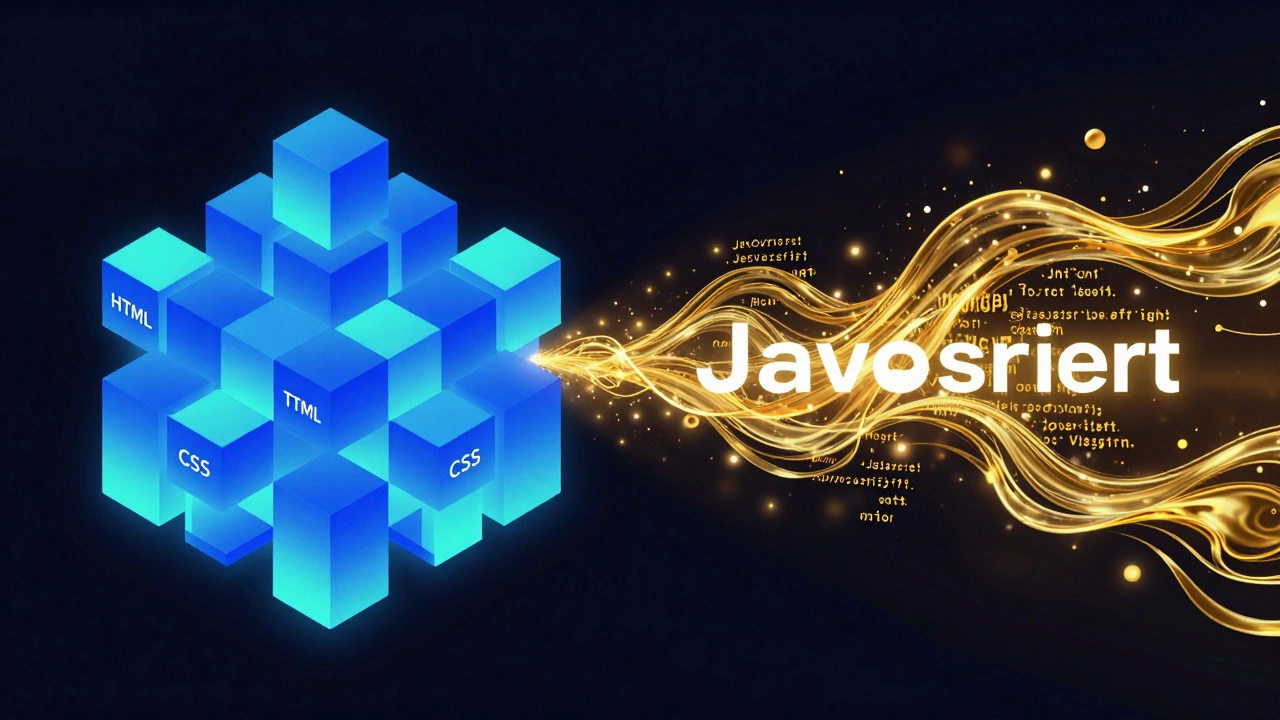
Before diving into heavy programming logic, you should understand HTML and CSS. Technically, these are not programming languages in the same sense as Python or JavaScript-they don't have logic, loops, or variables in the traditional way. HTML structures content, and CSS styles it. But they are the bedrock of web development.
Many beginners skip straight to JavaScript and struggle because they don't understand how the web is structured. Learning HTML and CSS teaches you how elements relate to each other on a page. It builds a mental model of the internet that will help you regardless of which programming language you pick later. Plus, building a simple personal portfolio site using just HTML and CSS is a fantastic first project. It gives you something tangible to show off.
Other Languages Worth Considering
While Python and JavaScript dominate the beginner space, other languages have specific niches where they shine.
- C#: If you are interested in game development, C# is the language behind the Unity engine. Unity is one of the most popular platforms for making 2D and 3D games. C# is structured and strongly typed, which helps you write cleaner code habits early on.
- Swift: Want to build iOS apps? Swift is Apple's language for iPhone and iPad development. It is modern, safe, and integrates seamlessly with Xcode, Apple's development environment. If you live in an Apple ecosystem, this is a logical choice.
- Java: Often taught in universities, Java is robust and widely used in enterprise environments. It is stricter than Python, forcing you to declare types explicitly. This can be harder for beginners but teaches strong discipline. It is also the primary language for Android app development.
How to Choose Your First Language
Don't overthink this decision. The core concepts of programming-variables, loops, conditionals, functions-are similar across all languages. Once you learn one well, picking up a second one becomes much easier. Here is a quick decision tree to help you choose:
| Your Goal | Recommended Language | Why? |
|---|---|---|
| I want to analyze data or AI | Python | Huge libraries like Pandas and TensorFlow |
| I want to build websites | JavaScript | Runs in the browser; essential for interactivity |
| I want to make video games | C# | Primary language for Unity engine |
| I want to build iPhone apps | Swift | Native integration with iOS devices |
| I am unsure / Just curious | Python | Easiest syntax; broad applicability |
Tips for Success in Your First Coding Journey
Knowing the language is half the battle. The other half is knowing how to learn. Many beginners quit because they try to memorize syntax instead of understanding logic. Here is how to stay on track:
- Build Projects Early: Don't wait until you know everything. Build a calculator, a to-do list, or a simple blog. Projects reveal gaps in your knowledge that tutorials hide.
- Embrace Errors: Error messages are not failures; they are clues. Learning to read and debug error messages is a critical skill that separates amateurs from professionals.
- Use Version Control: Learn the basics of Git early. It allows you to save versions of your code and revert changes if something breaks. It is industry-standard practice.
- Join a Community: Whether it's a local meetup, a Discord server, or an online forum, connecting with other learners keeps you accountable. Discussing problems with peers often leads to breakthroughs.
- Consistency Over Intensity: Coding for 30 minutes every day is far more effective than cramming for 10 hours once a week. Your brain needs time to process and retain new information.
Remember, there is no such thing as a "bad" first language. The best language is the one you actually stick with. Start small, stay curious, and focus on solving problems rather than memorizing commands.
Is Python really the easiest language to learn?
Yes, for most people. Python's syntax is designed to be readable and concise, reducing the amount of boilerplate code you need to write. This allows beginners to focus on programming logic rather than getting bogged down by complex syntax rules.
Can I learn coding without any prior experience?
Absolutely. Coding is a learned skill, not an innate talent. Millions of self-taught developers started with zero background. The key is patience and consistent practice. Many free resources and structured courses cater specifically to absolute beginners.
Should I learn HTML and CSS before JavaScript?
If you are interested in web development, yes. HTML and CSS provide the structure and style for web pages. Understanding them helps you visualize how JavaScript manipulates the page. It creates a solid foundation for more complex interactive features.
How long does it take to become proficient in a programming language?
It varies based on time commitment and goals. You can learn the basics of a language like Python in a few weeks. However, becoming job-ready typically takes 6 to 12 months of dedicated study and project building. Proficiency is a continuous journey, not a destination.
Do I need a computer science degree to be a coder?
No. While a CS degree provides theoretical depth, many successful developers are self-taught or graduated from coding bootcamps. Employers increasingly value practical skills and portfolios over formal degrees. Demonstrating what you can build is often more important than where you learned it.

Anirudh Vaidya
I am an education consultant specializing in the Indian education system, and I enjoy exploring innovative teaching methods. My passion is writing about educational reforms and developments happening in India, trying to bring awareness to global audiences. I regularly contribute to various educational journals and participate in conferences worldwide. I believe in lifelong learning and am always keen to exchange ideas with fellow educators.