
Daily English Practice Tracker
Set Your Daily Goal
How many minutes will you practice today?
Your Weekly Progress
Today's Suggestion
Try talking to yourself about your morning routine for 10 minutes. No judgment, just practice.
Your Progress
| Day | Goal | Actual | Status |
|---|---|---|---|
| Monday | 15 min | 12 min | Almost there |
| Tuesday | 15 min | 15 min | Completed |
| Wednesday | 15 min | 0 min | Missed |
Want to speak English faster but don’t have time for classes or expensive tutors? You don’t need to leave your house. Millions of people have gone from hesitant whispers to confident conversations-all by practicing at home. It’s not about memorizing grammar rules. It’s about training your mouth, your ears, and your brain to work together. And yes, you can see real progress in weeks, not years.
Start Talking to Yourself
It sounds weird, but talking to yourself is one of the most powerful tools you have. No one’s listening. No one’s judging. You’re just practicing. Try describing your morning routine out loud: "I’m making coffee. The kettle just clicked off. I poured it into my favorite blue mug." Do this every day for 10 minutes. Your brain starts to build automatic connections between thoughts and words.
Try this next: narrate what you’re doing while you clean, walk the dog, or wait for your microwave. Don’t wait for perfect sentences. Just say it. The goal isn’t accuracy-it’s fluency. The more you speak, the less your brain freezes up when you actually need to talk to someone.
Shadowing: Copy Native Speakers Like a Pro
Shadowing means repeating out loud what you hear-right after you hear it. It’s not singing along. It’s mimicking. Pick a short video clip (30-60 seconds) from YouTube. Use a show like Friends, The Crown, or even a TED Talk. Play 5 seconds. Pause. Say it back. Try to copy the rhythm, the pauses, the tone. Not just the words. The way they breathe between sentences. The way they drop words like "I am" into "I’m."
Do this daily for 15 minutes. After a week, you’ll notice your own speech getting smoother. You’ll start using contractions naturally. You’ll stop sounding like a robot reading a textbook. This works because your brain learns pronunciation through repetition, not explanation.
Use Free Apps That Actually Work
Not all language apps are equal. Skip the ones that quiz you on verb conjugations. Focus on apps that force you to speak:
- ELSA Speak: Gives instant feedback on your pronunciation. It tells you exactly which sound you’re off on-like the difference between "ship" and "sheep."
- Speechling: Record yourself answering a prompt. Get real feedback from native speakers. No bots. Real humans.
- Tandem: Swap 15 minutes of English with someone learning your language. Text, voice, or video. You’ll learn slang, idioms, and how real people talk.
Use one of these for 10 minutes a day. That’s it. No need to spend hours. Consistency beats intensity every time.
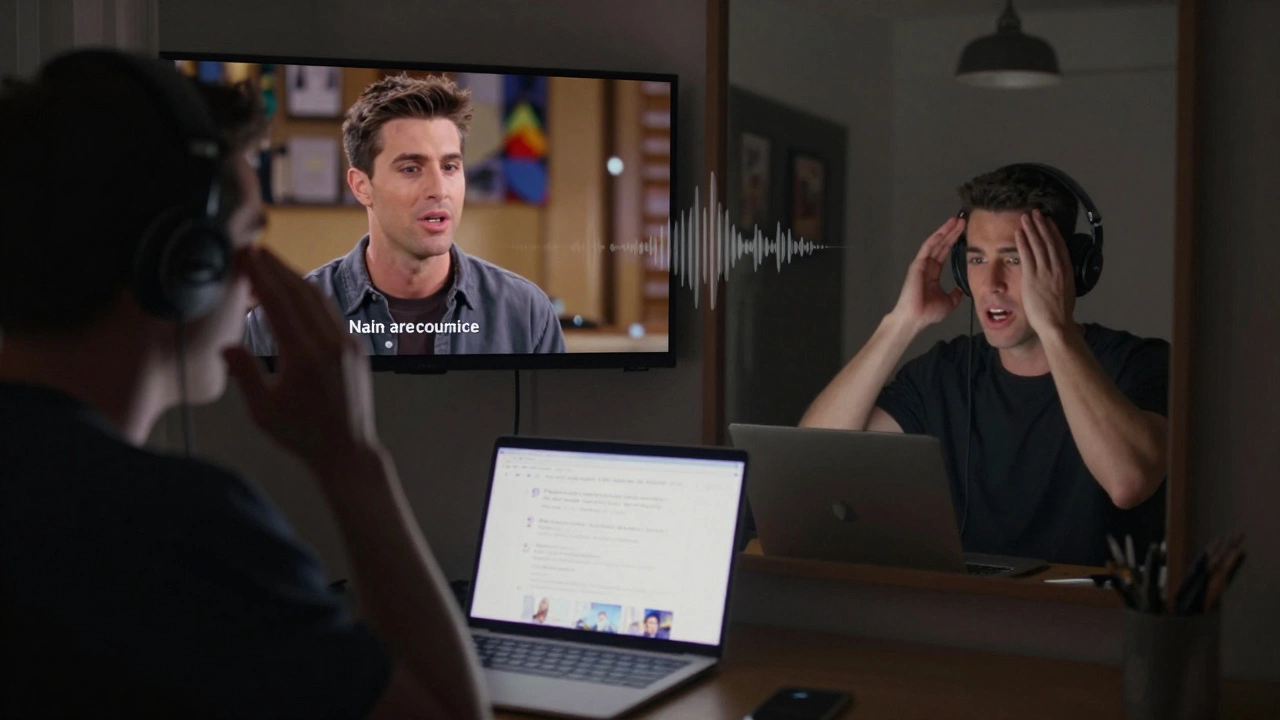
Watch Without Subtitles (Yes, Really)
Most people watch English shows with subtitles. That’s a trap. Your brain reads the words on screen and ignores the sound. You’re not training your ears. Turn off the subtitles. Use English audio only. At first, you’ll miss 70% of what’s said. That’s normal. After 10-15 minutes, your brain starts catching patterns. You’ll pick up on common phrases like "What’s up?" or "I’m gonna grab a coffee."
Try this trick: Watch the same 5-minute scene three days in a row. Day one: no subtitles. Day two: English subtitles. Day three: no subtitles again. You’ll be shocked at how much more you understand the third time. This builds listening muscle, and muscle grows with repetition.
Change Your Phone and Computer Settings
Your environment shapes your habits. If your phone, laptop, and smart speaker are set to English, you’re forced to interact with the language every single day. Go into your settings. Change the language to English. Don’t just for apps-change the whole system.
Now, every time you unlock your phone, check the weather, or ask Siri for the time, you’re hearing and using English. It’s passive learning-but it adds up. You’ll start thinking in English without realizing it. Instead of thinking "What time is it?" in your native language, you’ll think it in English. That’s when real fluency kicks in.
Record Yourself Weekly
Take one minute every Sunday and record yourself answering this question: "What was the best part of your week?" Don’t edit it. Don’t rewrite it. Just speak. Save the recording. Do this for four weeks. Then listen back.
You’ll hear your progress. Maybe week one was shaky. Week two, you used a new word. Week three, you didn’t pause to think. Week four, you laughed while speaking. That’s growth. You don’t need a teacher to tell you you’re improving. You can hear it yourself.
Speak Even When You’re Nervous
Here’s the truth: no one cares if you make a mistake. Not your friends. Not your coworkers. Not strangers on the internet. People are too busy thinking about their own mistakes to notice yours. The fear of sounding stupid is the biggest blocker. But every time you speak, even badly, you weaken that fear.
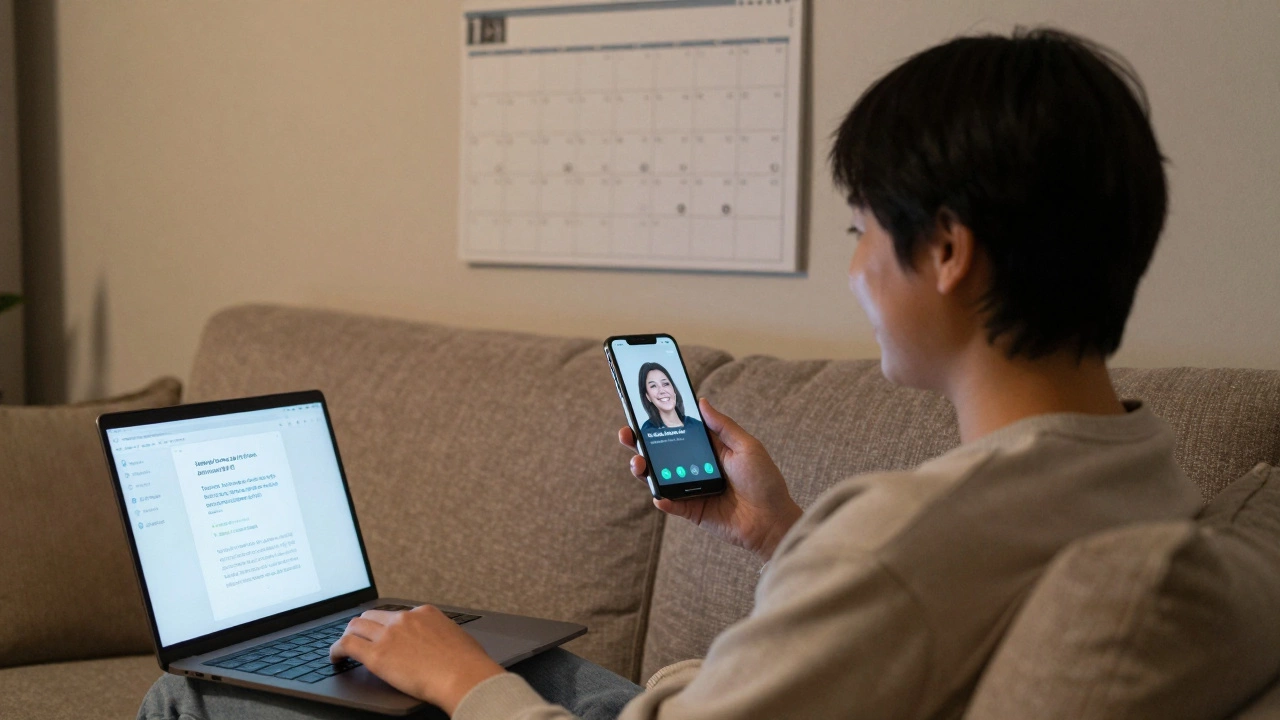
Try this: Call a customer service line in English. Order food. Ask a question at a local store. Use voice assistants. Say "Hey Google, how do I say ‘I’m running late’ in English?" Then say it. You’ll feel awkward. That’s okay. Do it again tomorrow. The awkwardness fades fast.
Build a Routine-Not a Goal
You don’t need to become fluent in 30 days. You need to speak for 15 minutes every day. That’s it. Make it part of your morning coffee, your commute, or your evening wind-down. Link it to something you already do.
Here’s a simple weekly plan:
- Monday: Shadowing (15 min)
- Tuesday: Talk to yourself (10 min)
- Wednesday: ELSA Speak or Speechling (10 min)
- Thursday: Watch a show without subtitles (20 min)
- Friday: Record yourself (5 min)
- Saturday: Use Tandem or talk to someone
- Sunday: Review your recording
You don’t have to do all of it every week. Just pick three things. Stick with them for 21 days. That’s how habits form.
Why This Works
Most people fail because they treat language like a subject to study. It’s not. It’s a skill. Like riding a bike or playing guitar. You don’t learn to ride by reading a manual. You fall off. You get up. You try again. Same with speaking.
The brain doesn’t care about perfect grammar. It cares about patterns. It cares about repetition. It cares about emotional connection. When you speak about your week, your favorite food, or your dog, you’re not practicing English-you’re sharing your life. That’s when the language sticks.
It’s not magic. It’s muscle. And muscles grow with use.
Can I really improve my speaking in just a few weeks?
Yes. If you practice speaking for 15 minutes a day, you’ll notice clearer pronunciation, fewer pauses, and more confidence in about 3-4 weeks. It’s not about knowing more words-it’s about using the words you already know without overthinking.
Do I need to learn grammar to speak better?
Not right now. Grammar helps with writing and exams, but speaking is about flow. You learn grammar naturally by hearing correct sentences over and over. Focus on listening and repeating first. Grammar will click on its own.
What if I’m too shy to talk to people?
Start with talking to yourself, your phone, or a recording app. Then move to voice messages. Then try a language exchange app like Tandem. You don’t need to talk to strangers in person. Start small. Every voice note you send builds your confidence.
Is it better to practice alone or with someone?
Both. Alone builds your skills. With someone builds your courage. Practice alone to get comfortable. Then use a partner to test yourself. You need both. But if you only have time for one, practice alone. You can always find a partner later.
What if I don’t have money for apps or courses?
You don’t need to spend anything. Use free YouTube channels like "English Addict with Mr Steve" or "Learn English with Emma." Watch TV shows on Netflix with English audio. Record yourself on your phone. Talk to your mirror. The tools are free. Your effort is the only cost.

Anirudh Vaidya
I am an education consultant specializing in the Indian education system, and I enjoy exploring innovative teaching methods. My passion is writing about educational reforms and developments happening in India, trying to bring awareness to global audiences. I regularly contribute to various educational journals and participate in conferences worldwide. I believe in lifelong learning and am always keen to exchange ideas with fellow educators.