
Online Learning Platform Selector
Answer These Questions
Your Recommendation
Select your preferences on the left and click "Find My Platform" to see which type of online learning architecture fits your needs best.
Result Title
Description goes here.
Key Characteristics:
Examples:
Walk into any conversation about digital education today, and you will hear the term "online platform" thrown around like it means one thing. It doesn't. If you are a student looking to learn Python, a corporate trainer needing to certify staff on safety protocols, or an instructor trying to sell your expertise, you are likely standing in front of three very different doors. Confusing them leads to wasted money, frustration, and dropped courses.
The landscape of e-learning platforms is not monolithic. It is divided into three distinct architectures, each built for a specific job. These are Learning Management Systems (LMS), Massive Open Online Courses (MOOCs), and Course Marketplaces. Understanding the difference between these three types is the first step toward choosing the right tool for your educational goals.
1. The Learning Management System (LMS): The Private Classroom
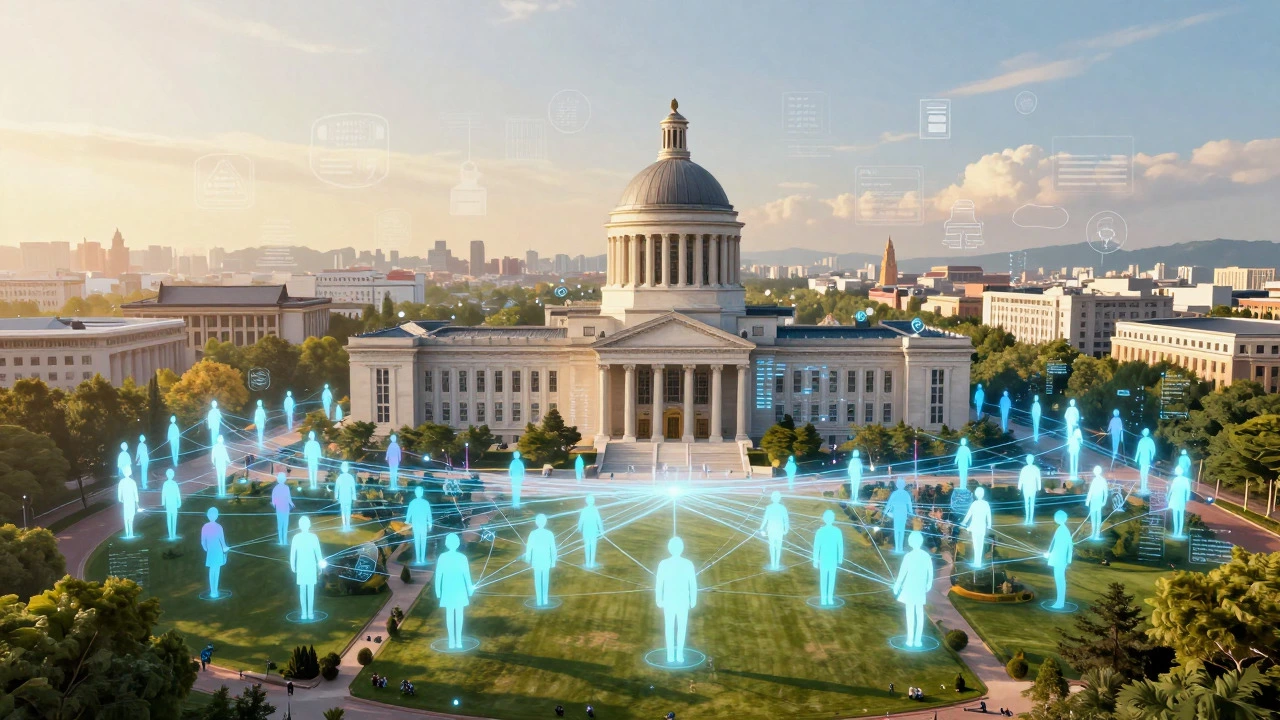
Think of an LMS as a private, walled garden. When you use an LMS, you are usually part of a specific organization-a university, a corporation, or a local school district. Access is restricted. You don’t just stumble upon an LMS; you are given login credentials because you belong there.
The primary function of an LMS is administration and tracking. While it delivers content-videos, PDFs, quizzes-its real power lies in the backend data. An LMS answers questions like: Did John complete Module 4? What was Sarah’s score on the compliance test? Is Mike falling behind his peers?
Institutions like Harvard University use Canvas or Blackboard to manage their semester-long courses. Companies use platforms like Cornerstone OnDemand or SAP Litmos to ensure every employee has completed mandatory training. The user experience is often utilitarian. It is not designed to be flashy; it is designed to be reliable and trackable.
- Key Feature: User authentication and role-based access control.
- Primary Audience: Employees, enrolled students, members of a paid cohort.
- Content Source: Created internally by the organization or licensed specifically for that group.
- Cost Model: Usually free for the end-user, but expensive for the institution hosting it.
If you are a learner, you choose an LMS only if you have no choice-you are required to be there. If you are an educator or administrator, you choose an LMS when you need control over who sees what and when they see it.
2. The MOOC Platform: The Public University
Massive Open Online Courses, or MOOCs, represent the democratization of higher education. Platforms like Coursera, edX, and FutureLearn partner with top-tier universities and organizations to offer courses to anyone with an internet connection. Unlike the private LMS, the MOOC model is open by default.
The structure here mimics traditional academia. You enroll in a "course" that has a start date, a syllabus, weekly modules, and often a final project or exam. Many MOOCs offer certificates, which can sometimes count toward academic credit or professional development hours. However, the barrier to entry is low. You can audit most courses for free, paying only if you want a verified certificate or graded feedback.
The social aspect is also different from an LMS. Because thousands of people might take the same course simultaneously, MOOCs rely heavily on peer-to-peer interaction. Discussion forums are massive, and peer-graded assignments are common. This creates a unique dynamic where you learn not just from the professor, but from the diverse perspectives of fellow learners globally.
- Key Feature: Scalability and access to prestigious institutional content.
- Primary Audience: Lifelong learners, career switchers, students supplementing formal education.
- Content Source: Universities (e.g., Stanford, MIT) and industry leaders (e.g., Google, IBM).
- Cost Model: Freemium. Free to audit, paid for certification and grading.
You choose a MOOC when you want structured, high-quality education from recognized authorities without the tuition fees of a physical degree program. It is ideal for deep dives into subjects like data science, history, or public health.
3. The Course Marketplace: The Digital Bazaar
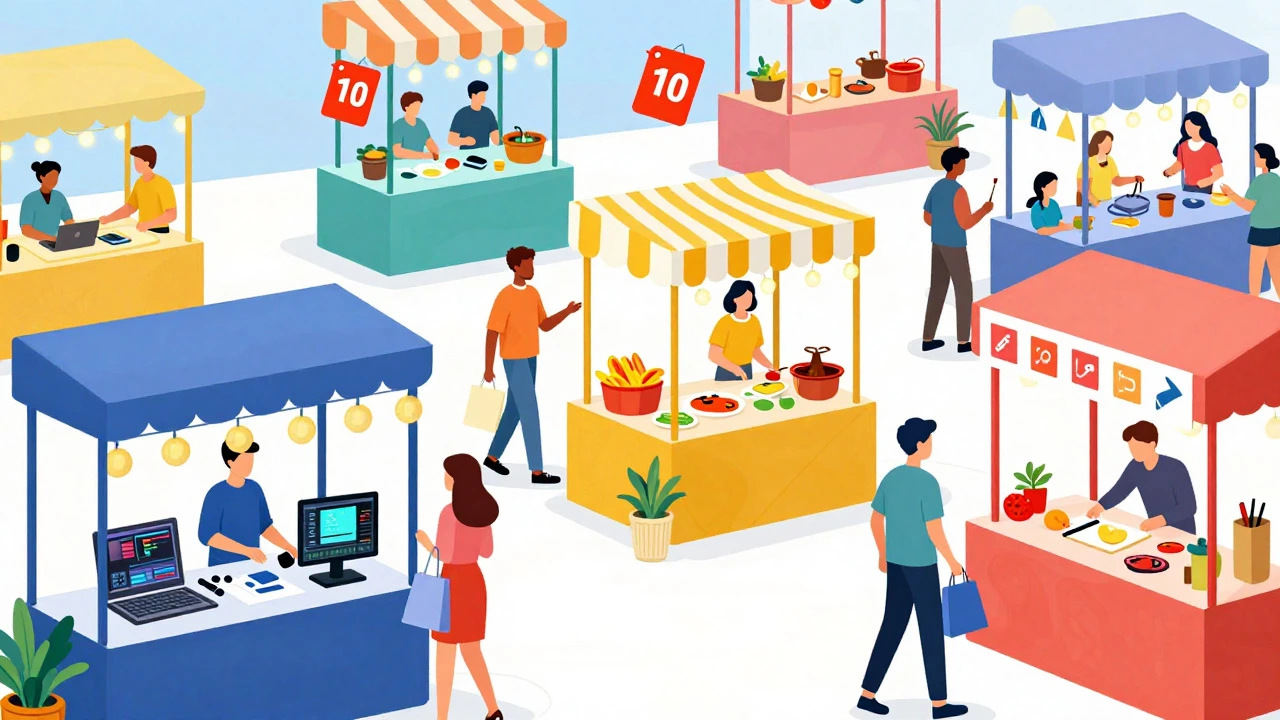
The third type is the Course Marketplace. Think of Udemy, Skillshare, or Domestika. These platforms do not create content themselves. Instead, they provide the infrastructure for individual instructors to create, price, and sell their own courses directly to consumers. It is less like a university and more like a bustling bazaar where everyone has a stall.
The content on marketplaces is incredibly diverse and often highly practical. While a MOOC might teach you the theoretical foundations of marketing, a marketplace course might teach you "How to Set Up Your First Facebook Ad Campaign in 2026." The focus is on immediate, actionable skills. The production quality varies wildly, from polished studio recordings to screen captures with voiceovers, but the best-selling courses are often those that solve a specific, urgent problem for the learner.
Pricing is another major differentiator. Marketplaces frequently run sales, dropping course prices from $200 to $15. This impulse-buy nature encourages learners to experiment with many topics. There is rarely a strict schedule. You buy the course, and you have lifetime access to the materials. You learn at your own pace, pausing and rewinding as needed.
- Key Feature: Vast variety of niche topics and flexible, self-paced learning.
- Primary Audience: Hobbyists, professionals seeking quick skill upgrades, entrepreneurs.
- Content Source: Independent experts, freelancers, and influencers.
- Cost Model: Per-course purchase or subscription (like Netflix for learning).
You choose a marketplace when you want to learn a specific tool, software, or hobby quickly. It is the go-to for learning Photoshop, knitting, copywriting, or how to code a specific app feature.
Comparing the Three Models
To make the right choice, you need to look at what you value most: control, prestige, or flexibility. Here is how they stack up against each other.
| Feature | LMS (Private) | MOOC (Public Uni) | Marketplace (Bazaar) |
|---|---|---|---|
| Access Control | Restricted (Login Required) | Open (Free Audit) | Open (Paid Access) |
| Primary Goal | Tracking & Compliance | Credentialing & Depth | Skill Acquisition & Hobby |
| Instructor Type | Internal Staff/Professors | University Faculty | Independent Experts |
| Interaction | Small Cohorts/TA Support | Peer Forums/Large Scale | Q&A Sections/Videos Only |
| Best For | Corporate Training/Schools | Academic Credit/Career Shifts | Quick Skills/Hobbies |
How to Choose the Right Platform for You
Your decision should depend entirely on your end goal. Ask yourself these three questions before signing up or buying software.
- Do I need proof of completion? If yes, and it needs to be academically rigorous, lean toward MOOCs. If it is for internal company compliance, an LMS is non-negotiable. If you just want to know how to bake sourdough bread, a marketplace course is sufficient.
- Do I need a schedule? LMS and MOOCs often have start and end dates, creating external accountability. Marketplaces are entirely self-paced, which requires high personal discipline.
- Who is teaching me? Do you trust a university brand (MOOC), a specific expert’s reputation (Marketplace), or your own organization’s curriculum (LMS)?
For example, if you are a marketer wanting to get certified in Google Analytics, you would go to a MOOC or the official Google training portal (which acts like an LMS). If you want to learn how to edit videos for TikTok, you would search for a highly-rated tutorial on a marketplace like Skillshare. The content differs because the intent differs.
The Blurring Lines in 2026
While these three categories remain distinct, the lines are blurring. Marketplaces are adding more structure, offering cohorts and live Q&A sessions to mimic the community feel of MOOCs. MOOCs are introducing micro-credentials and nanodegrees that compete with traditional degrees. Meanwhile, LMS providers are integrating AI tutors and gamification elements to make the private classroom more engaging.
However, the core architecture remains the same. Whether you are navigating a corporate training module, auditing a philosophy class from Yale, or buying a photography guide from an Instagram influencer, you are interacting with one of these three fundamental models. Knowing which one you are using helps you set realistic expectations for the learning journey ahead.
Is an LMS the same as a CMS?
No. A Content Management System (CMS) like WordPress is used to build websites. An LMS is specialized software for delivering and tracking educational courses. While you can add LMS features to a CMS, they serve different primary purposes.
Are MOOC certificates worth anything?
It depends on the employer. Certificates from reputable MOOC platforms like Coursera or edX, especially those partnered with top universities or tech giants, are increasingly recognized. They demonstrate initiative and specific knowledge, though they rarely replace formal degrees.
Which platform is best for beginners?
For absolute beginners, MOOCs are often better because they provide structured curricula designed to take you from zero to hero. Marketplaces can be overwhelming due to the lack of standardization in teaching quality and depth.
Can I use an LMS for my personal blog?
Yes, but it might be overkill. If you just want to sell a few PDF guides, a simple payment link is enough. If you want to sell a full video course with quizzes and progress tracking, an LMS plugin (like LearnDash for WordPress) or a dedicated marketplace account is more appropriate.
What is the cost difference between these platforms?
For learners, LMS is usually free (paid by the employer/school). MOOCs are free to audit but cost $50-$200 for certificates. Marketplaces charge per course ($10-$200) or offer monthly subscriptions ($15-$30) for unlimited access.

Anirudh Vaidya
I am an education consultant specializing in the Indian education system, and I enjoy exploring innovative teaching methods. My passion is writing about educational reforms and developments happening in India, trying to bring awareness to global audiences. I regularly contribute to various educational journals and participate in conferences worldwide. I believe in lifelong learning and am always keen to exchange ideas with fellow educators.