
Quality eLearning Course Checker
Evaluate Course Quality
Based on research showing completion rates below 10%, this tool helps you assess whether an eLearning course addresses key quality issues.
Course Quality Assessment
More people are taking courses online than ever before. But if you’ve ever tried to finish an online course, you know it’s not as simple as clicking play and waiting for knowledge to sink in. The truth is, eLearning has serious problems that most platforms ignore - and they’re costing learners time, money, and motivation.
Low Completion Rates Aren’t Just a Statistic - They’re a Symptom
Studies show that fewer than 10% of people who enroll in an online course actually finish it. Some reports put the number as low as 5%. That’s not because learners are lazy. It’s because the system is broken. Most eLearning platforms treat courses like products you buy once and forget about. No follow-up. No accountability. No real support.
Think about it: if you signed up for a gym membership and never saw a trainer, got no feedback, and had no one to check in on you, how long would you stick with it? That’s what most online courses feel like. You’re left alone with a video library and a progress bar that doesn’t care if you’re struggling.
Lack of Personalization Makes Learning Feel Like a Factory
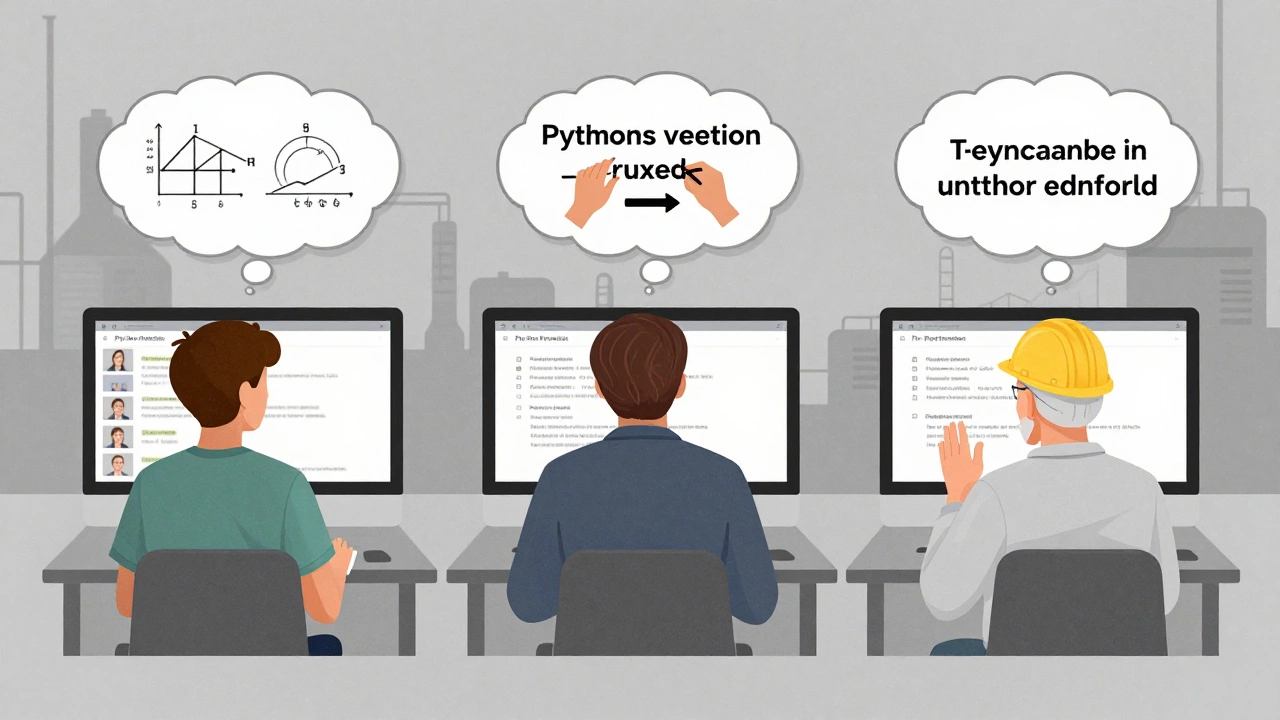
One-size-fits-all content is the biggest flaw in today’s eLearning platforms. A course on Python programming for beginners might have the same structure whether you’re a high school student, a mid-career teacher, or a retired engineer. There’s no adjustment for prior knowledge, learning speed, or goals.
Real learning isn’t linear. Some people need to see a concept three times. Others need to build something before they understand it. But most platforms don’t adapt. They push the same videos, same quizzes, same deadlines - regardless of who you are. That’s why so many learners feel stuck. They’re not dumb. The system just doesn’t speak their language.
Isolation Kills Motivation
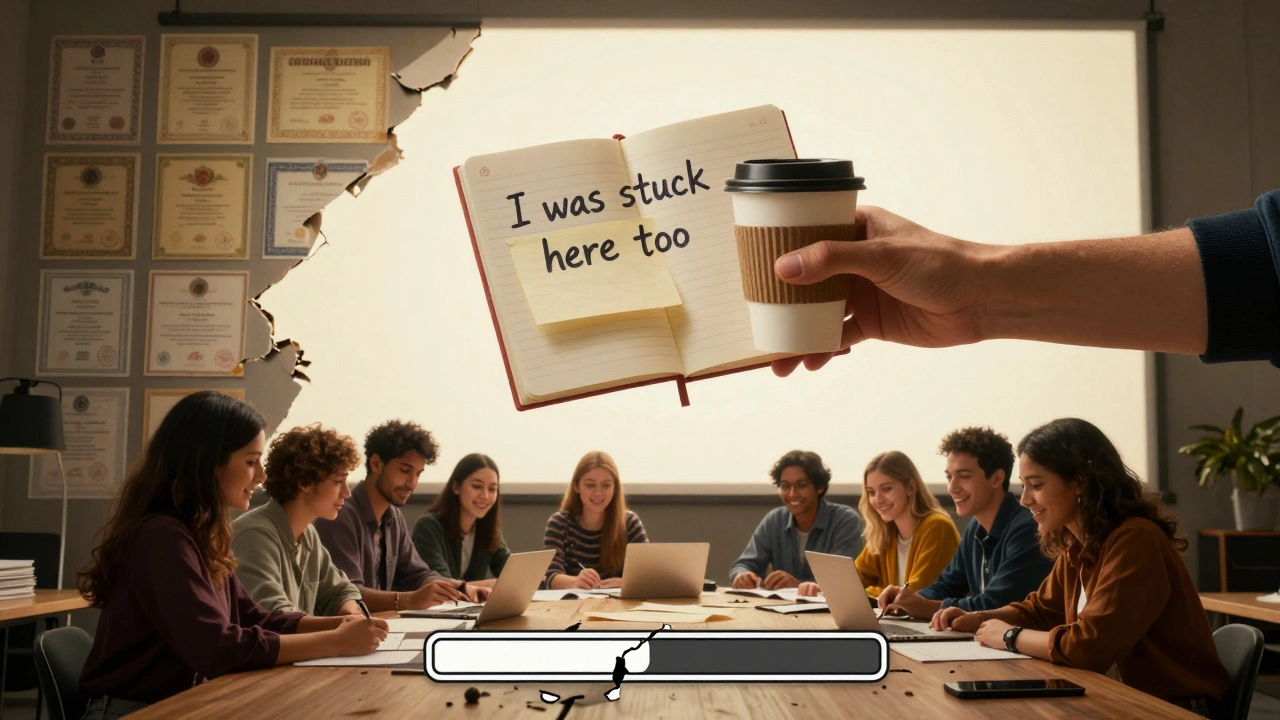
Learning is social. We remember things better when we talk about them, argue about them, or teach them to someone else. But online courses rarely build community. You get a forum where no one responds. A chat group that’s dead after week two. A comment section full of spam.
Without peers, mentors, or even a simple "how are you doing?" message, learners lose momentum. Human connection isn’t a bonus in education - it’s the engine. When you’re learning something hard, like calculus or coding, you need someone to say, "I was stuck here too," or "Try this approach." Most platforms don’t create space for that.
Content Is Outdated Before It’s Even Published
Many eLearning platforms use content that’s years old. A course on digital marketing might still teach Facebook ads from 2020. A programming course might use Python 3.6 when 3.12 is the standard. Employers know this. They don’t trust certificates from platforms that haven’t updated their material in three years.
Technology moves fast. So should learning. But most platforms update content on a quarterly or annual cycle - if at all. They rely on instructors who don’t have time to keep up. The result? Learners graduate with skills that are already obsolete.
Assessments Don’t Measure Real Skill
Most online courses grade you with multiple-choice quizzes. You memorize a few facts. You pass. You get a certificate. But can you actually do the work? Can you build a website? Can you fix a bug? Can you explain your reasoning?
Real skills aren’t tested with checkboxes. They’re tested by doing. Yet, platforms avoid project-based assessments because they’re hard to scale. It’s easier to automate a quiz than to review a learner’s code, design, or presentation. So we end up with certificates that mean nothing to employers.
Technical Barriers Are Overlooked
Not everyone has a fast internet connection, a modern laptop, or quiet space to learn. In rural India, parts of Africa, or low-income neighborhoods in Australia, learners struggle just to load a video. But most platforms assume you have a high-end device and unlimited bandwidth.
There’s little effort to make courses work on low-end phones, offline modes, or data-saving modes. If you’re trying to learn while using 2G or sharing a tablet with three siblings, you’re already at a disadvantage. The platform doesn’t care - it just wants you to watch the video.
Profit Over Progress
Many eLearning companies are run like startups chasing growth, not education. Their main goal isn’t to help you learn - it’s to get you to sign up, pay, and stay on the site long enough to upsell you another course. That’s why you see endless free trials, pushy email campaigns, and gamified dashboards that feel more like a slot machine than a classroom.
When the business model is based on subscriptions, not outcomes, the learner becomes a metric. How many enrolled? How many clicked? How many didn’t cancel? The real question - "Did you actually learn anything?" - gets lost.
What’s Missing: Feedback, Support, and Real Accountability
The best online learning experiences don’t rely on fancy videos or slick interfaces. They rely on three things: feedback, support, and accountability.
- Feedback: Someone tells you what you’re doing right and wrong - not just "incorrect," but "here’s why this approach won’t work in real life."
- Support: Access to a real person - a tutor, mentor, or peer - who answers your questions within hours, not days.
- Accountability: A system that checks in on you. A deadline that matters. A community that notices if you disappear.
These aren’t luxury features. They’re the bare minimum for real learning. And they’re almost never built into mainstream eLearning platforms.
It’s Not the Technology - It’s the Design
The problem isn’t that eLearning is digital. It’s that it’s designed like a product, not a learning experience. You wouldn’t design a hospital like a shopping mall. Why design education like a streaming service?
The solution isn’t more AI, more videos, or more gamification. It’s better human-centered design. Courses that adjust to you. Communities that stay active. Assessments that matter. Instructors who care. Platforms that measure growth, not just clicks.
If eLearning wants to be more than a fancy PDF with audio, it needs to stop pretending that scale equals quality. Real learning is messy, personal, and slow. And no algorithm can replace a human who believes in you.
Why do most online courses have such low completion rates?
Most online courses fail because they offer no real support, no personalization, and no accountability. Learners sign up with good intentions but quickly feel isolated and overwhelmed. Without feedback, community, or someone checking in, motivation drops. Studies show completion rates are often below 10% because the system doesn’t help people stick with it - it just counts enrollments.
Are eLearning certificates worth anything?
Most aren’t. Employers care more about what you can do than what certificate you have. If a course only tests you with multiple-choice quizzes and doesn’t include real projects, portfolios, or live feedback, the certificate holds little value. The few that do matter are from platforms that require hands-on work, peer reviews, and mentor evaluations - not just video watching.
Can AI fix the problems in eLearning?
AI can help personalize content and suggest next steps, but it can’t replace human feedback, emotional support, or accountability. Chatbots can answer basic questions, but they can’t notice when a learner is giving up. No algorithm can say, "I see you’re stuck - let’s talk." Real learning needs human connection, not just data patterns.
Why don’t eLearning platforms update their content more often?
Updating content is expensive and time-consuming. It requires subject matter experts to review, rewrite, and test new material. Most platforms prioritize acquiring new users over improving existing courses. As a result, courses on fast-changing fields like AI, cybersecurity, or digital marketing often use outdated examples - making them useless for job seekers.
What should I look for in a quality eLearning course?
Look for three things: 1) Real projects with feedback from instructors or peers, 2) Access to a live community or mentor, and 3) Clear outcomes tied to real-world skills - not just certificates. The best courses make you do something, not just watch something. If the platform doesn’t let you build, present, or explain your work, walk away.
What Comes Next?
If you’re a learner, don’t settle for passive videos. Demand courses that challenge you, connect you, and measure real skill. If you’re building a platform, stop chasing enrollments. Start building relationships. Real education doesn’t scale through automation - it scales through trust.
The future of eLearning isn’t about more videos. It’s about better human experiences. And that starts with admitting the problems - not hiding them behind slick interfaces and flashy ads.

Anirudh Vaidya
I am an education consultant specializing in the Indian education system, and I enjoy exploring innovative teaching methods. My passion is writing about educational reforms and developments happening in India, trying to bring awareness to global audiences. I regularly contribute to various educational journals and participate in conferences worldwide. I believe in lifelong learning and am always keen to exchange ideas with fellow educators.