School Board Recommendation Engine
Answer these three questions to find out which board aligns best with your needs.
Recommended Board
Board Name
Description goes here.
Strength
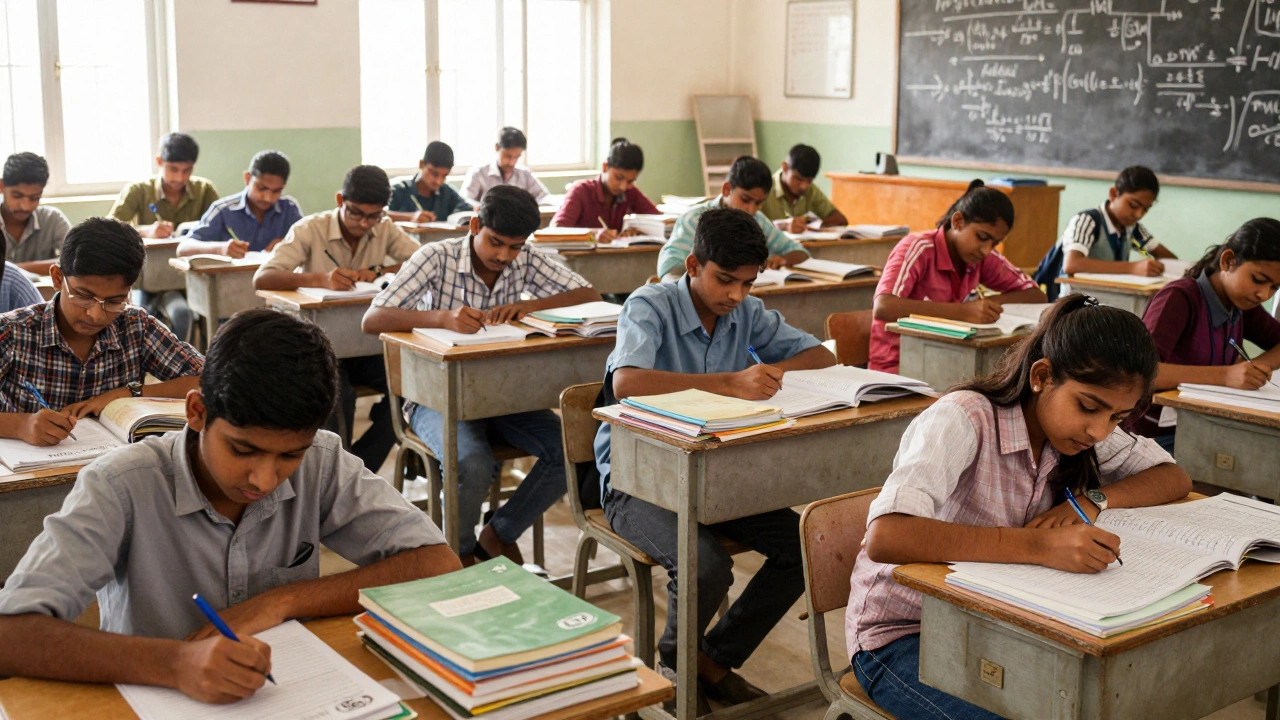
Imagine walking into a classroom in Mumbai, another in London, and a third in New York. The desks look different, the accents vary wildly, but the pressure on students remains eerily similar. But when we talk about "school boards" as distinct entities that define an entire nation's educational identity, one name rises above the rest in terms of sheer volume and global influence: the Central Board of Secondary Education, or CBSE. While no single board rules the entire planet, CBSE dominates the landscape for Indian students studying both within India and across the globe.
The question of which board is "most popular" depends entirely on how you measure popularity. Are we counting the number of registered students? The geographic spread? Or the prestige associated with university admissions? If we look at raw numbers, the answer is clear. However, if we look at international recognition among expatriates, the picture becomes more complex, involving players like Cambridge International and the IB Diploma Programme. Let’s break down who actually holds the crown and why it matters for parents and students today.
The Undisputed Champion by Numbers: CBSE
If popularity is defined by the number of students taking exams under a specific curriculum, CBSE is the heavyweight champion. Established in 1929, this board oversees approximately 35,000 to 40,000 schools. That isn't just a few hundred institutions; that is a massive network that educates over 3 million students annually. To put that in perspective, the population of many small countries is smaller than the number of students sitting for CBSE Class 10 and Class 12 board exams every year.
Why is it so dominant? It aligns perfectly with the national competitive exam ecosystem in India. Students aiming for IIT JEE (engineering) or NEET (medical) find the CBSE syllabus highly compatible with their preparation needs. The curriculum is standardized, predictable, and widely accepted by universities not just in India, but increasingly around the world. For millions of families, choosing CBSE isn't a lifestyle choice; it's a strategic decision to keep academic options open.
Furthermore, CBSE has expanded aggressively outside India. You will find CBSE-affiliated schools in Dubai, Singapore, Qatar, Oman, and various African nations. This expansion serves the large diaspora of Indian professionals who want their children to maintain a connection to the home country's educational standards while living abroad. When these students eventually return to India, they face zero friction in reintegration.
The Strong Contender: State Boards
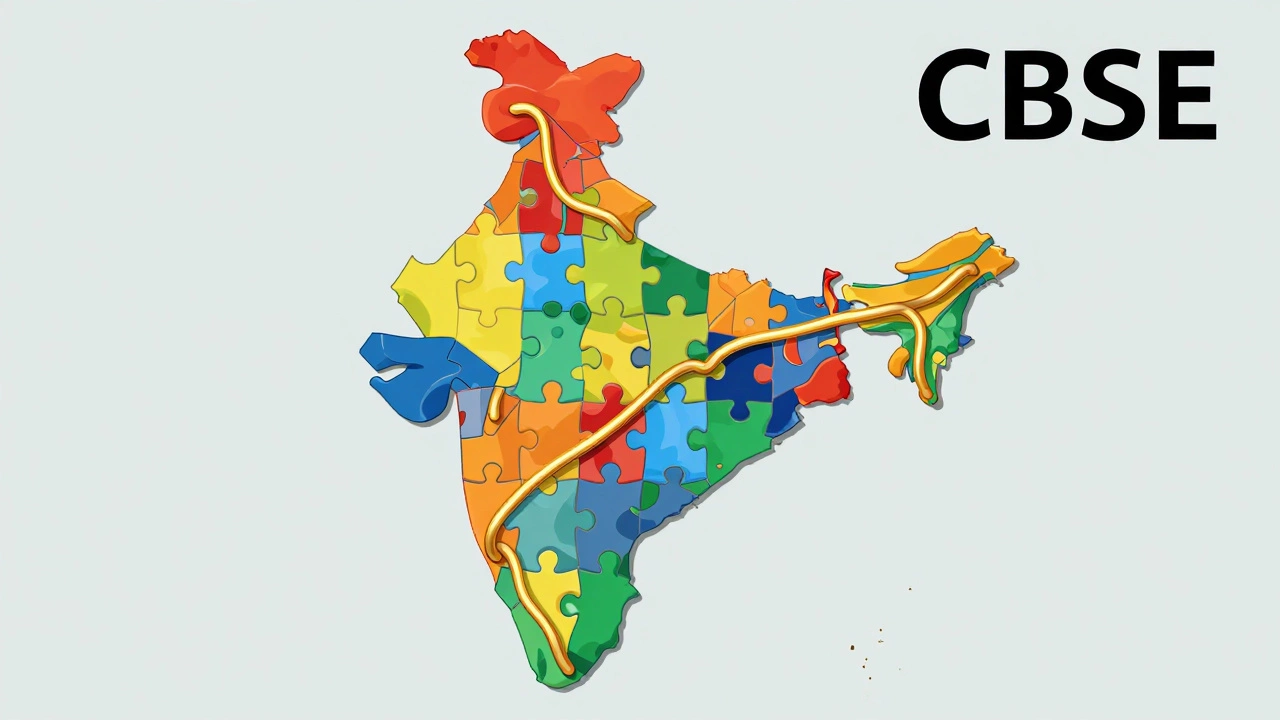
It would be misleading to discuss Indian education without mentioning State Boards. In states like Maharashtra, Tamil Nadu, and Uttar Pradesh, state-run boards govern millions of students. For example, the Maharashtra State Board of Secondary and Higher Secondary Education manages a vast network of schools, often outnumbering CBSE schools in rural and semi-urban areas.
However, state boards are fragmented. There is no single "State Board" entity; there are dozens of them, each with its own syllabus, language medium, and examination patterns. Because they are decentralized, they lack the unified brand power of CBSE. A student from Andhra Pradesh cannot easily transfer to a school in Gujarat without facing significant curriculum gaps. This fragmentation prevents any single state board from claiming the title of "most popular" on a national or global scale, even though their collective student count rivals CBSE.
The Prestige Play: ICSE and ISC
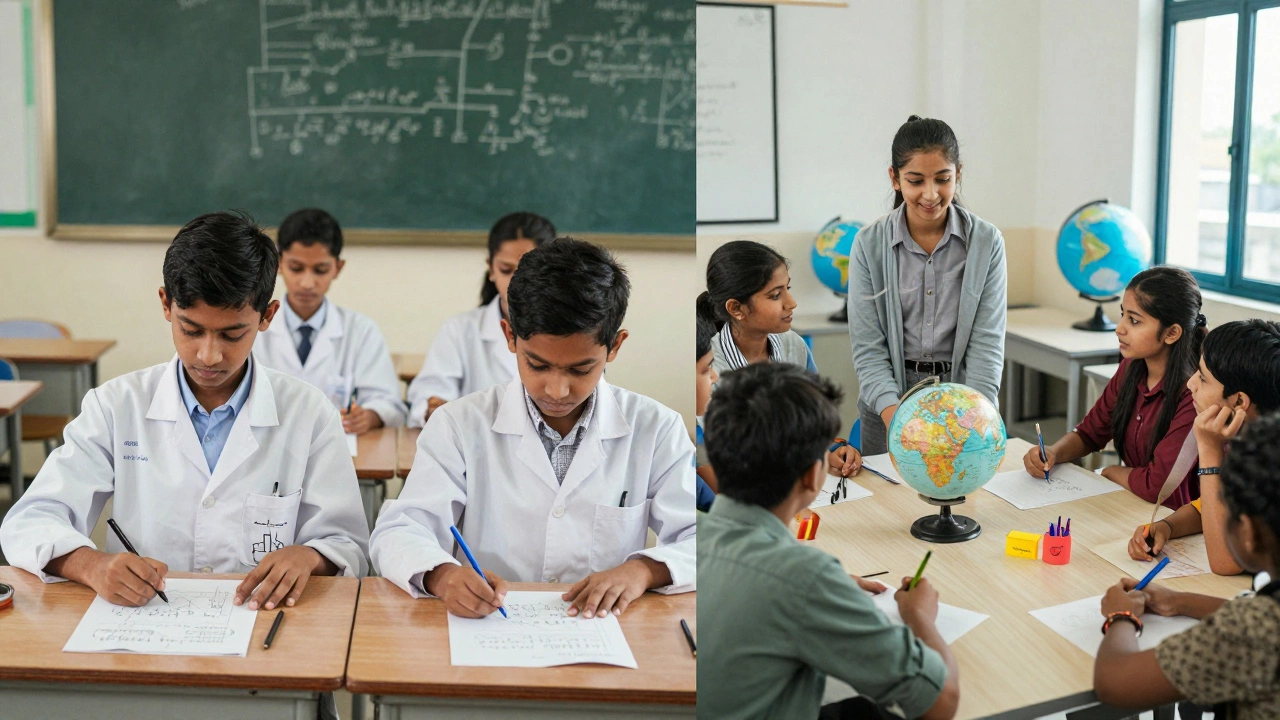
While CBSE wins on volume, the ICSE (and its senior counterpart, ISC) wins on intensity and linguistic proficiency. Administered by the Council for the Indian School Certificate Examinations, this board is often perceived as more difficult, particularly in English grammar, literature, and creative writing. Schools offering ICSE are frequently located in urban centers and cater to middle-to-upper-middle-class families who prioritize holistic development over rote learning.
Is ICSE more popular? Not in terms of raw numbers. It operates in roughly 1,500 to 2,000 schools compared to CBSE's tens of thousands. However, in terms of brand loyalty among certain demographics, it is incredibly strong. Parents who choose ICSE often do so because they believe it produces better communicators and critical thinkers. The syllabus is broader, requiring students to study more subjects in greater depth. For those planning to pursue liberal arts or humanities globally, the ICSE foundation is often considered superior due to its emphasis on analytical skills.
Global Giants: Cambridge and IB
When we step outside India, the definition of "board" shifts to "curriculum provider." Two names dominate the international stage: Cambridge Assessment International Education and the International Baccalaureate (IB).
| Feature | CBSE | ICSE | Cambridge (IGCSE/A-Level) | IB Diploma |
|---|---|---|---|---|
| Primary Audience | Indian nationals, domestic & diaspora | Urban Indian families | Expats, international schools worldwide | Highly mobile global citizens |
| Curriculum Focus | Science, Math, Competitive Exams | English, Literature, Broad Knowledge | Subject-specific depth, flexibility | Holistic, interdisciplinary, TOK |
| Global Reach | Strong in Asia/Middle East | Limited mostly to India | 160+ countries | 150+ countries |
| University Recognition | Excellent in India, Good globally | Good in India, Recognized globally | Gold standard in UK/Commonwealth | Highly regarded by US/EU universities |
Cambridge International offers IGCSE and A-Level qualifications. It is arguably the most widespread curriculum for non-native English speakers. With schools in over 160 countries, it provides a consistent standard that allows a student moving from Bangkok to Berlin to continue their education seamlessly. It is modular, allowing students to specialize early, which appeals to those who know their career path young.
The IB Diploma Programme is different. It is not just a set of exams; it is a pedagogical philosophy. IB requires students to take six subjects, plus a core component consisting of Theory of Knowledge (TOK), Creativity, Activity, Service (CAS), and an Extended Essay. It is notoriously demanding but highly respected by top-tier universities in the United States, Canada, and Europe. While fewer schools offer IB compared to Cambridge or CBSE, its prestige per capita is extremely high.
Why CBSE Remains the Top Choice for Many
Despite the allure of international curricula, CBSE maintains its lead for several practical reasons. First is cost. Setting up a fully compliant IB or Cambridge school requires significant investment in teacher training and infrastructure. CBSE schools can operate at a lower cost, making quality education accessible to a wider socioeconomic range.
Second is the alignment with higher education aspirations. In India, where engineering and medicine are the most sought-after careers, the CBSE syllabus is tailored to support this. The physics, chemistry, and mathematics concepts taught in CBSE Class 11 and 12 mirror the content of JEE and NEET entrance exams. Switching to an IB or Cambridge curriculum might mean missing out on specific topics required for these competitive tests, forcing students to seek external coaching.
Third, digital adaptation. During the pandemic, CBSE quickly pivoted to online assessments and flexible grading systems. Its centralized structure allowed for rapid policy changes that benefited millions of students simultaneously. Decentralized boards struggled with this coordination, highlighting the efficiency advantage of a unified system.
Choosing the Right Path: It’s Not Just About Popularity
So, which board should you choose? If you are an Indian family planning to stay in India or return eventually, CBSE is likely your safest bet. It offers stability, wide acceptance, and direct pathways to professional courses. If you value strong English communication and a broader academic base, ICSE is worth considering. If you are an expat family with no plans to return to India, or if you aim for universities in the UK or Commonwealth countries, Cambridge A-Levels provide excellent preparation. For those targeting elite liberal arts colleges in the US or seeking a challenging, holistic education, the IB Diploma is unmatched.
Popularity does not equal suitability. A popular board is simply one that serves the largest demographic need. Your child’s learning style, career goals, and future location should dictate the choice, not just the trend.
Is CBSE recognized internationally?
Yes, CBSE certificates are recognized by universities worldwide, including in the US, UK, Canada, and Australia. However, some top-tier universities may require additional standardized tests like SATs or IELTS depending on the country and program.
Which is harder: CBSE or ICSE?
Generally, ICSE is considered more rigorous, especially in English language and literature. The syllabus is broader and requires deeper conceptual understanding. CBSE is often seen as more straightforward and aligned with competitive exam patterns.
Can I switch from CBSE to IB in high school?
Switching is possible but challenging. IB has a unique assessment style and core requirements (like TOK and CAS) that differ significantly from CBSE. It is best to consult with the target school to ensure credit transferability and readiness for the IB workload.
Do employers prefer candidates from a specific board?
Most employers care more about the university degree and skills than the school board. However, recruiters often note that IB graduates tend to have strong research and presentation skills, while CBSE graduates may have stronger foundational knowledge in STEM fields due to competitive exam prep.
How many schools are affiliated with CBSE?
As of recent data, there are over 35,000 schools affiliated with CBSE, making it the largest school board in India and one of the largest in the world by student enrollment.

Anirudh Vaidya
I am an education consultant specializing in the Indian education system, and I enjoy exploring innovative teaching methods. My passion is writing about educational reforms and developments happening in India, trying to bring awareness to global audiences. I regularly contribute to various educational journals and participate in conferences worldwide. I believe in lifelong learning and am always keen to exchange ideas with fellow educators.