
Career Path & Salary Estimator
Answer these questions to discover which high-paying short-term course aligns with your profile and what salary you might expect.
Your Recommended Path
Loading...
Top MatchDescription goes here.
Key Skills to Learn:
Skills list...
Other Options
You don't need a four-year degree to land a six-figure job anymore. In fact, the fastest route to a high income in 2026 often involves skipping the traditional university path entirely and focusing on specific, high-demand skills. Employers are no longer just looking for degrees; they are looking for proof that you can do the work. This shift has created a massive opportunity for short-term courses-programs that last anywhere from three months to one year-to become the new gold standard for career acceleration.
But here is the catch: not all short courses are created equal. Some lead to dead-end gigs, while others open doors to roles with starting salaries exceeding $100,000 (or equivalent local currency). The question isn't just "which course is popular?" It is "which skill set commands the highest market value right now?" If you are looking to pivot your career or boost your income quickly, you need to focus on fields where supply is low and demand is exploding.
What is the single highest-paying short-term course?
There is no single "best" course because it depends on your background, but Data Science and Cloud Computing certifications consistently offer the highest return on investment. Entry-level roles in these fields often start between $80,000 and $120,000 annually in major tech hubs.
The Top Contenders for Highest Salary
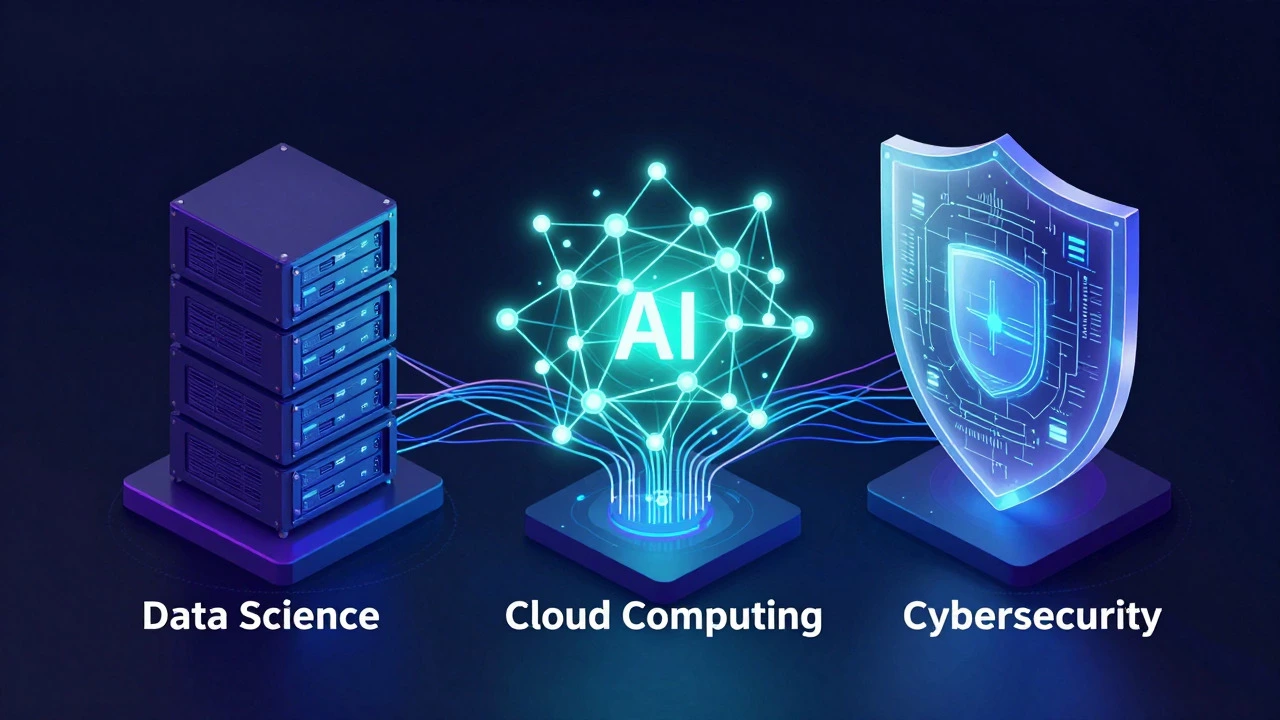
When we talk about high salaries in short-term training, we are usually talking about technology and specialized business operations. These fields have a steep learning curve, which acts as a barrier to entry. Once you cross that barrier with a focused course, you enter a market with fewer competitors and higher pay scales. Let's break down the top three categories that dominate the high-income landscape in 2026.
1. Data Science and Machine Learning
Data Science is the field of study that combines statistics, computer science, and domain expertise to extract meaningful insights from data. Why does this pay so well? Because every company, from retail giants to healthcare providers, runs on data. They need people who can interpret that data to make money-saving decisions.
A short-term bootcamp or intensive certification in Python, SQL, and machine learning algorithms can prepare you for junior data analyst or data scientist roles. You don't need a PhD. You need to know how to clean data, build predictive models, and visualize results using tools like Tableau or Power BI. The key here is portfolio building. Your course should require you to complete real-world projects, not just multiple-choice quizzes.
- Key Skills: Python, R, SQL, TensorFlow, Pandas.
- Typical Duration: 3-6 months intensive.
- Average Starting Salary: $85,000 - $115,000 USD.
2. Cloud Computing Engineering
If Data Science is the brain of modern business, Cloud Computing is the infrastructure that allows businesses to store, process, and manage data over the internet rather than on local servers. With the global migration to cloud platforms continuing at a rapid pace, companies are desperate for certified engineers who can manage these environments securely and efficiently.
Certifications from major providers like Amazon Web Services (AWS), Microsoft Azure, and Google Cloud Platform (GCP) are highly respected. Unlike a general IT diploma, these certifications are specific, practical, and directly tied to industry standards. A course that prepares you for the AWS Certified Solutions Architect exam, for example, can take as little as two to three months if you already have some basic IT knowledge. Even without prior experience, an intensive bootcamp can get you job-ready for cloud support or junior engineering roles.
- Key Skills: AWS/Azure/GCP architecture, DevOps, Kubernetes, Docker.
- Typical Duration: 2-4 months for certification prep.
- Average Starting Salary: $90,000 - $130,000 USD.
3. Cybersecurity Analysis
As digital transformation accelerates, so does cybercrime. Cybersecurity is the practice of protecting systems, networks, and programs from digital attacks. The shortage of skilled cybersecurity professionals is a global crisis. Governments and corporations are throwing money at this problem because the cost of a breach is catastrophic.
Short-term courses in ethical hacking, network security, and compliance frameworks (like ISO 27001) can fast-track you into this field. Certifications such as CompTIA Security+, CEH (Certified Ethical Hacker), or CISSP (for those with more experience) are the gatekeepers. The beauty of this field is that it values hands-on ability over academic pedigree. If you can demonstrate that you can find vulnerabilities and patch them, you will be hired.
- Key Skills: Network security, penetration testing, risk management, cryptography.
- Typical Duration: 3-6 months.
- Average Starting Salary: $80,000 - $120,000 USD.
Comparison of High-Paying Short-Term Paths
To help you decide which path fits your current situation, let's look at a direct comparison. Remember, "starting salary" varies by location, but these figures represent averages in major tech markets like San Francisco, New York, London, and Sydney.
| Course Category | Primary Focus | Time to Job-Ready | Barrier to Entry | Avg. Starting Salary (USD) |
|---|---|---|---|---|
| Data Science | Statistical analysis, AI modeling | 4-6 months | High (Math/Coding) | $95,000 |
| Cloud Computing | Infrastructure, DevOps | 3-4 months | Medium (IT Basics) | $105,000 |
| Cybersecurity | Network defense, Hacking | 3-5 months | Medium-High | $90,000 |
| UX/UI Design | User research, Interface design | 3-6 months | Low-Medium (Creative) | $75,000 |
| Digital Marketing | SEO, PPC, Content Strategy | 1-3 months | Low | $55,000 |
Notice the trend? The harder the technical skill, the higher the starting pay. Data Science and Cloud Computing sit at the top because they require a blend of logic, coding, and system understanding that takes time to master-even in an accelerated format.
Hidden Gems: Non-Technical High Earners
Not everyone wants to code or configure servers. That doesn't mean you are stuck with low-paying options. There are non-technical short-term courses that command respectable salaries, particularly if you combine them with existing soft skills.
Product Management: While senior product managers often have MBAs, junior product roles are increasingly accessible through short-term certificates. These courses teach you agile methodologies, user story mapping, and stakeholder management. If you have a background in sales or customer service, a 3-month product management bootcamp can pivot you into a role earning $70,000-$90,000.
Scrum Master / Agile Coaching: Certification as a Certified ScrumMaster (CSM) takes only a weekend or two days. However, landing a job requires understanding the broader agile ecosystem. When paired with project management experience, this credential can significantly boost your hourly rate, especially in freelance or contract roles.
Salesforce Administration: Salesforce is the dominant CRM platform in the world. Becoming a Salesforce Administrator is a niche skill that is in constant demand. The certification process is rigorous but manageable within 3-4 months. Admins often start around $70,000 and can quickly move up to consultant roles earning over $120,000.
How to Choose the Right Course for You
Picking the "highest salary" course is useless if you hate the work. Burnout is real, and switching careers again after six months costs you more time and money. Use this checklist to evaluate any short-term program before you pay a dime.
- Check the Curriculum Depth: Does the course teach you theory, or does it force you to build things? Look for capstone projects. If the syllabus is mostly video lectures with no hands-on labs, skip it.
- Verify Industry Recognition: Is the certificate recognized by employers? For tech roles, look for partnerships with AWS, Google, or Microsoft. For business roles, look for accreditation from bodies like PMI or SHRM.
- Assess Career Support: The best courses offer resume reviews, mock interviews, and networking events. A piece of paper gets you noticed; a network gets you hired.
- Look at Alumni Outcomes: Don't believe the marketing claims. Ask for verified placement rates and average salaries of graduates from the last 12 months. LinkedIn is your friend here-search for alumni and see where they actually work.
- Consider the Time Commitment: Can you handle 20 hours a week of study while working? If not, a part-time 6-month course is better than a full-time 3-month crash course that leads to burnout.

Pitfalls to Avoid
In the rush to get a high-paying job, many learners fall into traps that waste their resources. Here is what to watch out for.
The "Get Rich Quick" Myth: No course guarantees a job. Some shady programs promise "guaranteed placement" with vague terms. Read the fine print. Usually, it means they will send your resume to a database, not that you will get an offer.
Ignoring Prerequisites: Jumping into a Data Science course without knowing basic algebra or programming logic is a recipe for failure. Be honest about your current skill level. If you are a beginner, look for "foundational" tracks first.
Focusing Only on Tools: Tools change. Python might be replaced by something else in ten years. Focus on concepts. Learn how to think like a data scientist or an engineer, not just how to use a specific software version. Concepts endure; tools expire.
Next Steps: Your Action Plan
If you are ready to invest in a high-salary short-term course, here is your immediate action plan.
First, audit your current skills. Are you comfortable with numbers? Lean towards Data Science. Do you like solving puzzles and breaking things? Try Cybersecurity. Do you enjoy organizing systems and processes? Look at Cloud Computing or Product Management.
Second, dedicate one week to free exploration. Take free introductory modules on Coursera, edX, or YouTube. Spend 10 hours trying each field. See which one feels less like work and more like a challenge you want to solve.
Third, choose a reputable provider. Look for institutions with strong industry ties. In Australia, organizations like TAFE offer vocational pathways, while global platforms like General Assembly, Springboard, or Udacity offer intensive bootcamps. Compare costs, but remember: cheap often means low support.
Finally, start building your portfolio today. Even before you finish the course, create a GitHub account for code samples or a Behance profile for design work. Document your learning journey. This shows potential employers your passion and consistency.
The highest-paying short-term course is the one you actually finish and apply. The market rewards competence, not just credentials. Pick a path that aligns with your strengths, commit fully, and the salary will follow.
Can I get a high-paying job with only a short-term certificate?
Yes, especially in tech fields like Cloud Computing, Data Science, and Cybersecurity. Employers in these sectors prioritize demonstrable skills and certifications over traditional degrees. However, you must supplement your certificate with a strong portfolio of projects to prove your ability.
Is Data Science harder than Cloud Computing?
Data Science generally has a steeper initial learning curve because it requires strong foundations in mathematics, statistics, and programming. Cloud Computing is more about understanding architecture, services, and configuration. Both are challenging, but Data Science demands more abstract thinking early on.
How long does it take to become job-ready in these fields?
Most intensive bootcamps range from 3 to 6 months. However, becoming truly job-ready often requires an additional 1-2 months of dedicated job searching, interview preparation, and portfolio refinement. Plan for a 6-month total timeline from start to hire.
Are online short-term courses as valuable as in-person ones?
For technical skills, yes. Online courses often provide access to better instructors and more up-to-date curricula. The key is ensuring the course offers sufficient interaction, code reviews, or project feedback. Self-paced courses require high self-discipline to be effective.
What is the best short-term course for beginners with no tech background?
Digital Marketing, UX/UI Design, or Salesforce Administration are excellent entry points. They require less heavy coding initially and rely more on creativity, communication, and logical organization. From there, you can gradually add technical skills to increase your earning potential.

Anirudh Vaidya
I am an education consultant specializing in the Indian education system, and I enjoy exploring innovative teaching methods. My passion is writing about educational reforms and developments happening in India, trying to bring awareness to global audiences. I regularly contribute to various educational journals and participate in conferences worldwide. I believe in lifelong learning and am always keen to exchange ideas with fellow educators.