Education System Fit Analyzer
Which System Suits You?
Select the statements that resonate most with your preferences.
Your Profile:
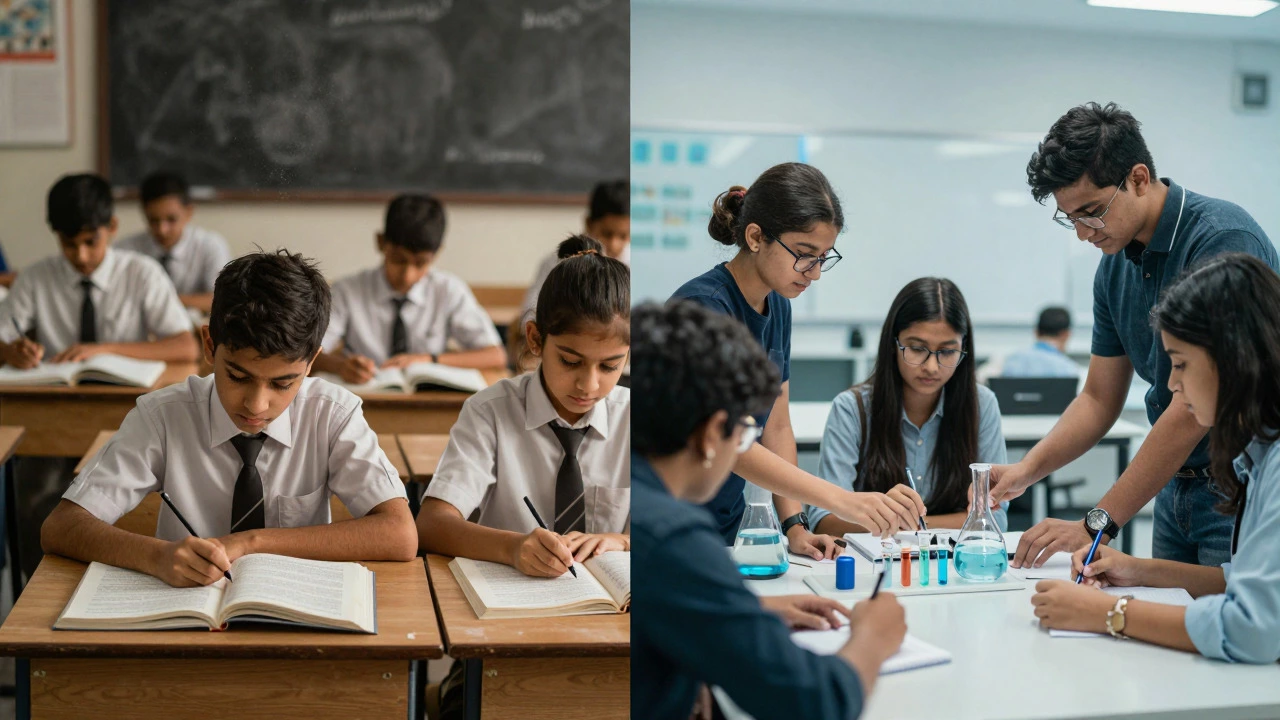
Imagine two students. One is in a classroom in New Delhi, memorizing formulas for the Central Board of Secondary Education (CBSE) final exams. The other is in a high school in Chicago, working on a semester-long project about local water quality. Who is better prepared for the future? That is the question behind "Is the education system in the USA better than India?" It is not a simple yes or no. The answer depends entirely on what you value more: deep theoretical knowledge or practical, creative problem-solving.
As someone who has lived through both systems-studying under the rigorous Indian curriculum and later navigating the American university landscape-I can tell you that neither system is perfect. Each has strengths that the other desperately needs. This article breaks down the real differences between the Indian education system and the American education system, focusing on structure, teaching methods, and outcomes. We will look at why the CBSE syllabus produces strong engineers, while the US model often creates better entrepreneurs.
The Core Philosophy: Rote Learning vs. Critical Thinking
The biggest difference lies in how students are taught to think. In India, particularly within the CBSE board framework, the focus is heavily on mastering content. You read the textbook, understand the concept, and then reproduce it accurately in an exam. The goal is precision. If there is one right answer, finding it quickly is a skill worth celebrating. This approach builds incredible discipline and a strong foundational knowledge base in subjects like mathematics and science.
In contrast, the US K-12 system prioritizes critical thinking and application over memorization. Teachers often ask open-ended questions with no single correct answer. Students are encouraged to debate, challenge assumptions, and present their own ideas. While this fosters creativity and confidence in public speaking, it can sometimes leave gaps in fundamental knowledge. An American student might be great at arguing a point but struggle with complex calculus compared to their Indian peer who has practiced thousands of similar problems.
This philosophical divide shapes everything else. In India, success is defined by scores. In the US, success is defined by a holistic profile, including extracurriculars, leadership roles, and personal essays.
Structure and Flexibility: Fixed Paths vs. Exploration
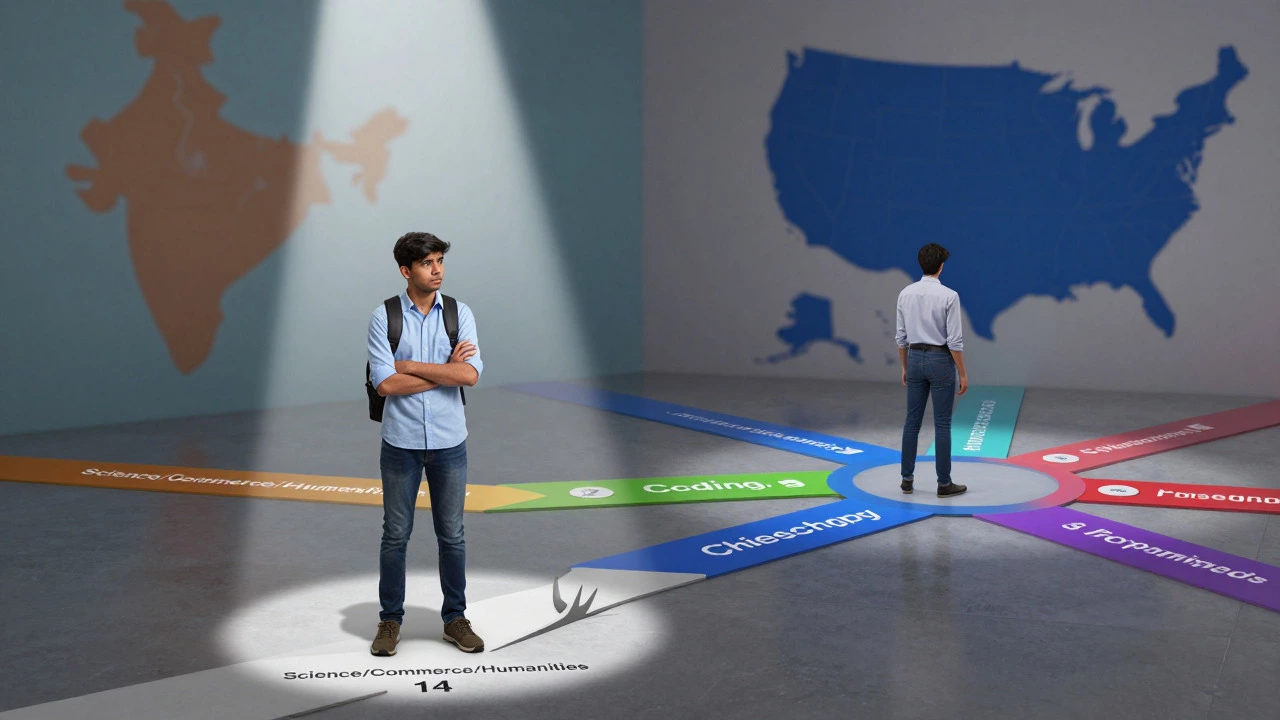
Let’s look at the structure. The Indian system is linear and rigid. After completing Class 10 under the CBSE curriculum, students must choose a stream: Science, Commerce, or Humanities. This choice is made at age 14 or 15, which feels incredibly young. Once you pick Science, you are largely locked into that path. Switching to Arts later is difficult and stigmatized. This early specialization means students enter college with deep expertise in their chosen field, but they miss out on broader exposure.
The US higher education system works differently. High school covers a broad range of subjects. When students reach college, they declare a major, but many spend their first two years taking general education courses. You can study philosophy, coding, and music all in the same semester. This flexibility allows students to discover their true interests without the pressure of making a life-defining decision at age 14. However, this freedom can also lead to indecision and longer time-to-graduation.
| Feature | India (CBSE Focus) | USA (General Model) |
|---|---|---|
| Primary Goal | Mastery of content and exam performance | Critical thinking and holistic development |
| Specialization Age | Age 14-15 (Class 11 Stream Selection) | Age 18+ (College Major Declaration) |
| Assessment Method | High-stakes annual written exams | Continuous assessment, projects, participation |
| Teacher Role | Authority figure, knowledge dispenser | Facilitator, mentor, guide |
| Cost of Higher Ed | Low (Public institutions) to Moderate | Very High (Student debt crisis) |
The Pressure Cooker: Competition and Mental Health
You cannot talk about the Indian system without mentioning the pressure. The competition for seats in top institutions like the Indian Institutes of Technology (IITs) is fierce. Millions of students prepare for entrance exams like JEE and NEET. The stakes are incredibly high because these degrees are seen as tickets to stable, high-paying careers. This environment breeds resilience and hard work, but it also takes a toll on mental health. Burnout is common among CBSE students in Classes 11 and 12.
In the US, the pressure exists but looks different. Instead of competing against millions for a few spots, students compete to build a unique personal brand for college admissions. They need to stand out through sports, arts, community service, and internships. This encourages well-roundedness but can create anxiety around identity and self-worth. The financial pressure is also immense, with many students graduating with significant student loan debt from private universities.
Quality of Infrastructure and Resources
When comparing infrastructure, the US generally has the advantage. Most American high schools have access to advanced laboratories, computer labs, sports facilities, and up-to-date textbooks. The funding for public education, while unequal across states, tends to provide a baseline of resources that many Indian government schools lack. Private schools in India, however, often rival or exceed US facilities in terms of technology and modern amenities.
In India, there is a stark divide between urban private schools and rural government schools. A CBSE-affiliated private school in Mumbai may have smart classrooms and robotics kits, while a government school nearby struggles with basic supplies. The US system faces its own equity issues, with wealthier districts having significantly better-funded schools than poorer ones, but the gap in basic resources is generally narrower than in India.
Which System Produces Better Outcomes?
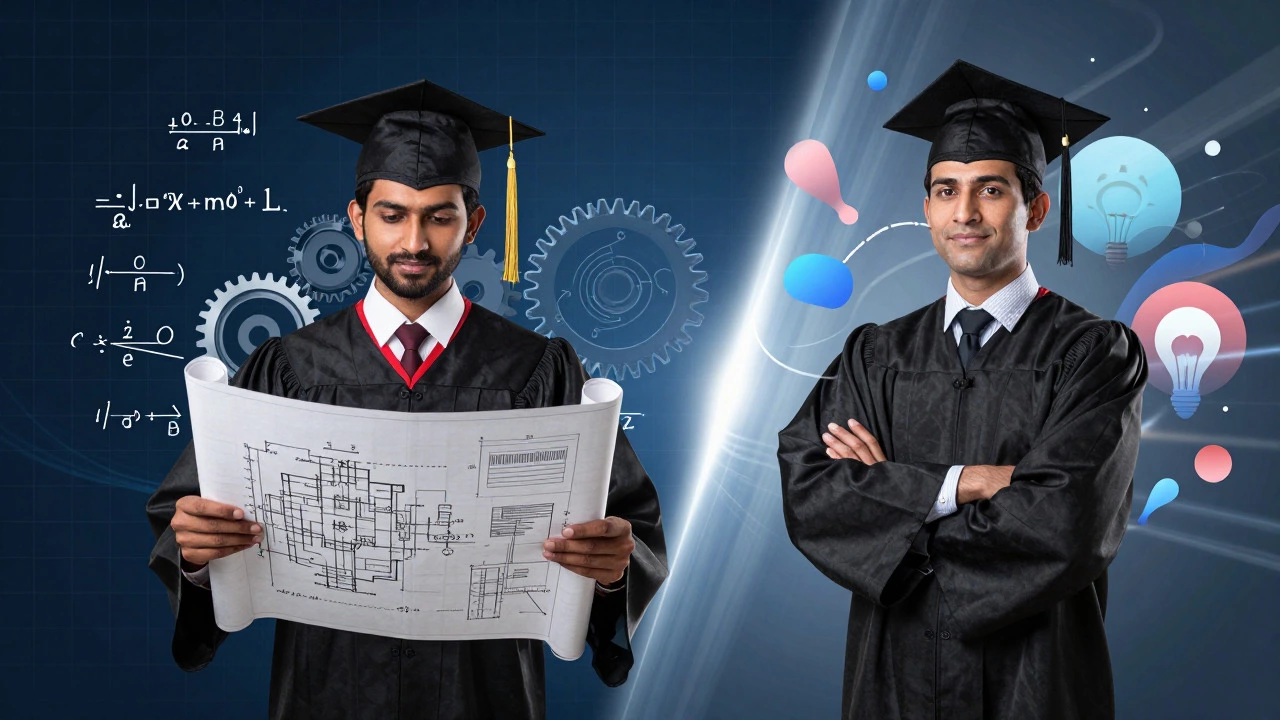
If you measure success by standardized test scores in math and science, India often performs exceptionally well, especially among students from competitive boards like CBSE and ICSE. These students are highly sought after by tech companies worldwide because of their strong analytical skills. If you measure success by innovation, entrepreneurship, and soft skills like communication and teamwork, the US system often shines. American graduates are typically more comfortable with ambiguity, collaboration, and presenting ideas persuasively.
The ideal scenario would combine the best of both worlds: the rigorous academic foundation of the Indian system with the creative, holistic approach of the US system. Many international schools in India now try to blend these models, offering IB or Cambridge curricula alongside local requirements. Similarly, US colleges increasingly emphasize STEM rigor to remain globally competitive.
Conclusion: It Depends on Your Goals
So, is the education system in the USA better than India? If you want a structured, cost-effective path to becoming an engineer or doctor with deep technical knowledge, the Indian system, particularly the CBSE pathway, is incredibly effective. If you value exploration, creative freedom, and developing soft skills alongside academics, the US system offers a more flexible and supportive environment, albeit at a much higher cost.
For parents and students deciding between the two, consider your long-term goals. Are you aiming for a specialized technical career where foundational strength is key? Or are you interested in fields like business, arts, or research where adaptability and originality matter more? Understanding these differences helps you make informed choices about schooling, coaching, and higher education pathways.
Is the CBSE syllabus harder than the US high school curriculum?
Yes, generally speaking, the CBSE syllabus for subjects like Mathematics and Physics is more advanced and rigorous than the standard US high school curriculum. CBSE students often cover topics equivalent to first-year college courses in the US, such as calculus and vector algebra, before graduation. However, US Advanced Placement (AP) courses offer comparable depth for motivated students.
Can I use my CBSE marks to apply for US universities?
Absolutely. US universities accept CBSE grades for admission. However, since grading scales differ, you may need to submit a credential evaluation or rely on your school's transcript. Strong CBSE scores (90%+) are viewed very favorably, especially when combined with good SAT/ACT scores and extracurricular activities.
Why do Indian students perform so well in US tech companies?
Indian students, particularly those from CBSE and IIT backgrounds, excel due to their strong foundation in mathematics and problem-solving. The rigorous training in logic and algorithms prepares them well for coding interviews and technical roles. Additionally, the cultural emphasis on education drives high levels of perseverance and continuous learning.
Is the US education system too expensive compared to India?
Yes, significantly. Public universities in India charge minimal fees, even for engineering and medical degrees. In the US, tuition at public universities can range from $10,000 to $30,000 per year, while private universities can exceed $60,000 annually. This often leads to substantial student debt, whereas Indian graduates typically start their careers debt-free.
Does the US system neglect academic rigor?
Not necessarily. While the average US high school curriculum may be less intense, top-tier US high schools and AP programs maintain high academic standards. The difference is that the US system allows students to opt into higher rigor rather than forcing everyone into the same track. This ensures that students who are truly interested in challenging material can pursue it without being held back by peers who need more support.

Anirudh Vaidya
I am an education consultant specializing in the Indian education system, and I enjoy exploring innovative teaching methods. My passion is writing about educational reforms and developments happening in India, trying to bring awareness to global audiences. I regularly contribute to various educational journals and participate in conferences worldwide. I believe in lifelong learning and am always keen to exchange ideas with fellow educators.