Exam Competition Calculator
Selection Rate Result
Example Scenarios from the Article
Every year, millions of students sit for exams that promise to change their lives. But not all exams are created equal. Some have acceptance rates lower than getting into Harvard. Others see hundreds of thousands competing for a few hundred spots. So which one is truly the most competitive exam in the world?
UPSC Civil Services Exam: The Ultimate Challenge
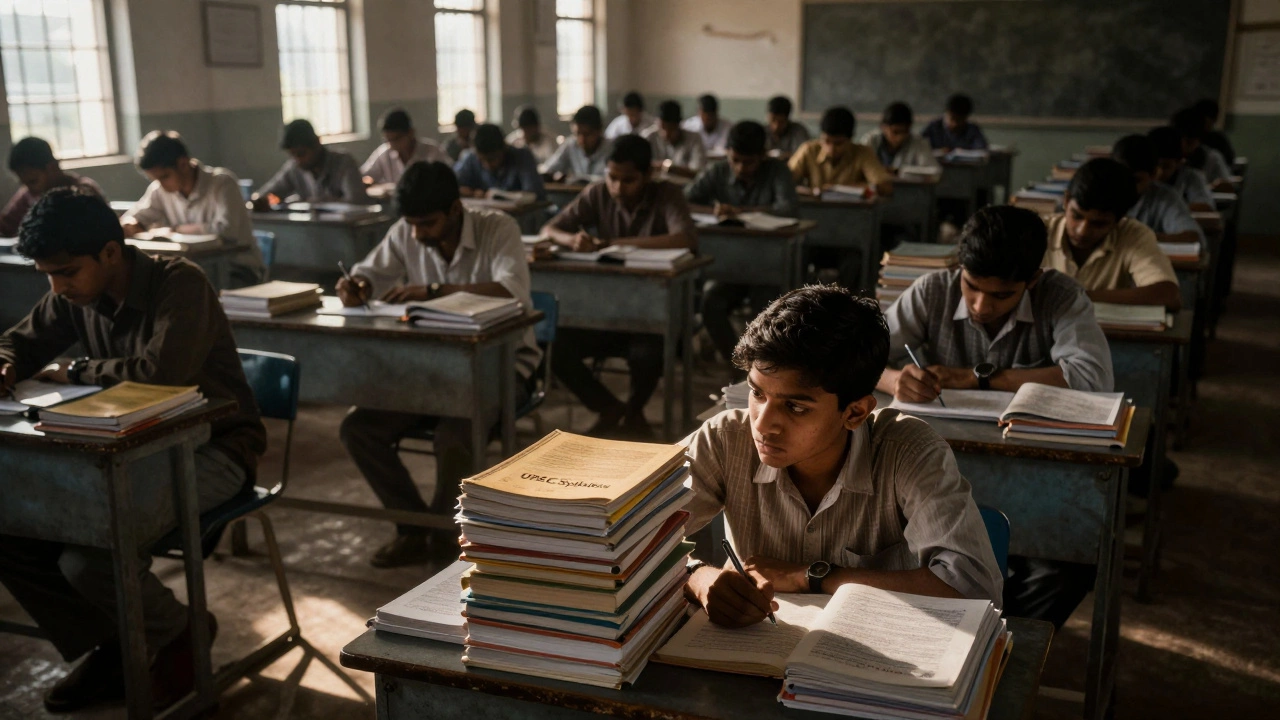
The UPSC Civil Services Examination in India stands out not just for its difficulty, but for the sheer scale of competition. In 2025, over 1.3 million candidates applied for just 1,250 posts. That’s a selection rate of less than 0.1%. For comparison, Harvard’s acceptance rate in 2024 was around 3.4%. This exam doesn’t just test knowledge-it tests endurance, discipline, and mental toughness.
The exam has three stages: Prelims, Mains, and the Personality Test (interview). The Prelims alone eliminates 95% of applicants. Of those who clear it, only about 1 in 10 make it through the Mains. And even then, the final interview can drop candidates with top Mains scores. Many aspirants spend 3 to 5 years preparing, often quitting jobs or putting personal lives on hold.
What makes UPSC unique is the breadth of what’s tested. You need to know Indian history, international relations, economics, ethics, public administration, and current affairs-all in detail. And you must write answers in clear, structured Hindi or English. There’s no multiple-choice safety net. One wrong turn in your answer can cost you a dream job.
IIT JEE: The Engineering Gauntlet
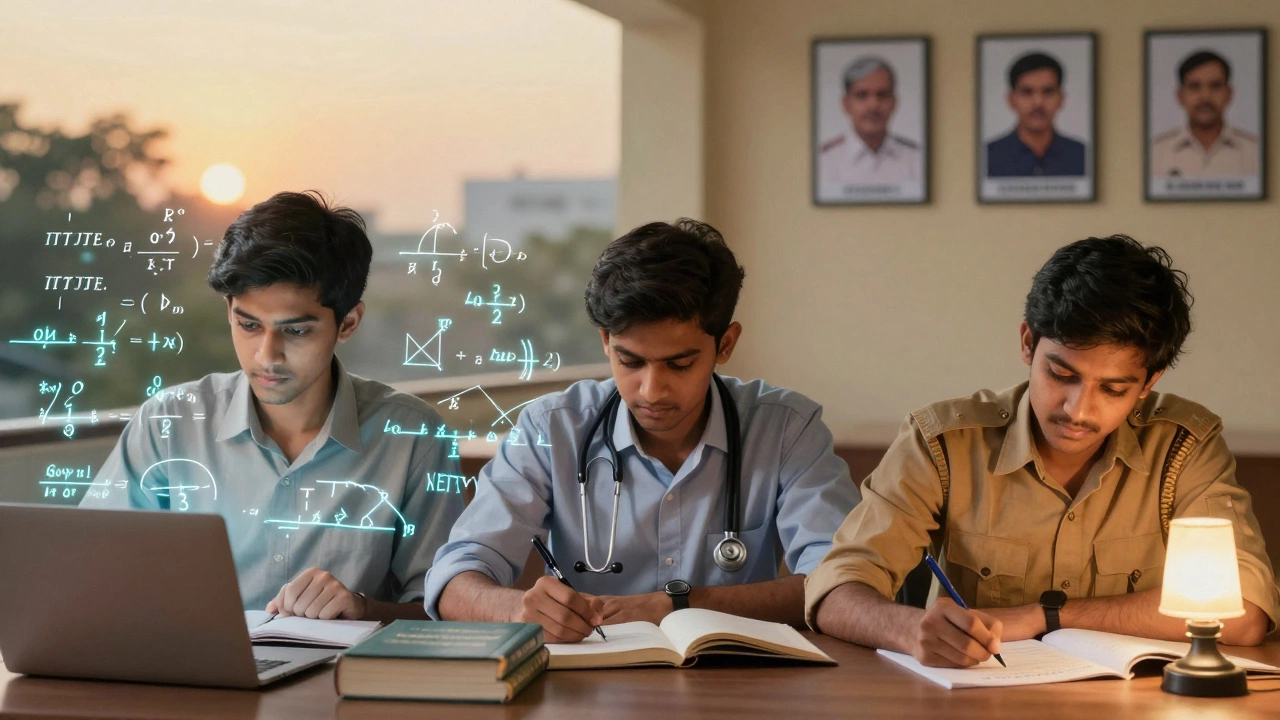
If UPSC is about power and service, IIT JEE is about brainpower and precision. Every year, more than 1.5 million students take the Joint Entrance Examination for admission to India’s top engineering institutes. Only about 10,000 get into the IITs. That’s less than 0.7% selection rate.
Unlike UPSC, IIT JEE is a single-day exam with a fixed syllabus: physics, chemistry, and math. But the questions are designed to be tricky, requiring deep conceptual clarity and lightning-fast problem-solving. Students start preparing as early as Class 8. Many attend coaching centers for 5-6 hours a day, six days a week. The pressure is immense. There are stories of students collapsing during the exam, or worse-losing their lives to stress.
What makes IIT JEE stand out is how it shapes careers. Graduates from IITs dominate India’s tech sector, Silicon Valley startups, and global research labs. But the cost of entry is brutal. Coaching fees can run over ₹5 lakh. Families sell property to fund preparation. The exam isn’t just competitive-it’s a national obsession.
NEET: The Medical Lottery
For students who want to become doctors, NEET (National Eligibility cum Entrance Test) is the only path. In 2025, over 2.3 million students appeared for NEET UG. Only 100,000 seats are available across all medical colleges in India. That’s a selection rate of just 4.3%.
But here’s the catch: 70% of those seats are in government colleges, which charge as little as ₹10,000 per year. The rest are in expensive private colleges costing over ₹10 lakh annually. So the real competition isn’t just to pass-it’s to score high enough to get into an affordable government college. A score of 650+ out of 720 is needed to have a real shot.
NEET’s syllabus is narrower than UPSC or IIT JEE-biology, chemistry, and physics-but the competition is fiercer because every student wants the same thing: a stable, respected, high-status job. In rural India, a doctor in the family can lift an entire village’s social standing. That’s why NEET sees families investing everything-even their children’s childhoods-into this one exam.
CAT: The MBA Race
The Common Admission Test for India’s top MBA programs-especially IIMs-isn’t about memorizing facts. It’s about logic, speed, and strategy. Over 250,000 candidates take CAT each year. Around 4,000 get into the IIMs. That’s a 1.6% success rate.
CAT doesn’t test your knowledge of economics or finance. It tests how well you can solve puzzles under pressure. The exam has three sections: Verbal Ability, Data Interpretation & Logical Reasoning, and Quantitative Ability. You get only 120 minutes. One misread question, one wrong guess, and you’re out of the top 10 schools.
What makes CAT competitive isn’t just the numbers-it’s the outcome. Graduates from IIM Ahmedabad or Bangalore earn starting salaries of ₹30-40 lakh per year. Top performers hit ₹1 crore+. That kind of return on investment drives millions to compete. But the real challenge? You need to be among the top 1% of test-takers to even get a call.
GRE and GMAT: Global Competition
While Indian exams dominate in volume, global exams like GRE and GMAT are no walk in the park. Over 700,000 people take the GRE each year for admission to U.S. graduate programs. But top universities like Stanford, MIT, and Harvard don’t just want high scores-they want scores in the 99th percentile. That means a 330+ out of 340 on the GRE, or a 750+ on the GMAT.
The difference? These exams are taken by students from over 180 countries. You’re not just competing with your neighbor-you’re competing with the brightest minds from China, South Korea, Nigeria, and Brazil. A 325 GRE score used to guarantee admission. Now, it’s barely enough to get your application read.
And here’s the twist: many students take both GRE and GMAT. They apply to 10-15 schools. They spend months writing essays, collecting recommendation letters, and polishing their resumes. The exam is just the first hurdle. But it’s the one that filters out the majority.
Why UPSC Wins the Title
So which exam is the most competitive? By every measurable metric-applications, selection rate, preparation time, social pressure, and life-altering stakes-UPSC takes the crown.
It’s not just about the numbers. It’s about what the exam represents. In India, becoming an IAS officer isn’t just a job. It’s a legacy. It’s the power to change policy, fix corruption, and influence millions of lives. The exam doesn’t just test your mind-it tests your soul.
No other exam asks you to master 100+ subjects, write 9 detailed essays, survive a 30-minute interview with cabinet secretaries, and then wait 10 months for results-all while your friends move on with their lives. UPSC doesn’t just select candidates. It forges them.

What Makes an Exam Truly Competitive?
It’s not just about how many people apply. It’s about what’s at stake. An exam becomes truly competitive when:
- The reward is rare and life-changing
- The preparation demands years of sacrifice
- The selection rate is below 1%
- Society places immense cultural value on the outcome
- Failure carries deep personal and social consequences
UPSC hits every single point. IIT JEE and NEET come close-but they’re focused on one career path. UPSC opens doors to every sector of governance: police, railways, finance, foreign service, disaster management. That’s why even those who fail UPSC often end up in top jobs elsewhere. The exam becomes a filter for the most determined.
Is There a Way Out?
Some say the system is broken. That too many students are trapped in a cycle of stress and failure. And they’re right. But change doesn’t come from avoiding the exam. It comes from rethinking how we prepare.
Successful candidates don’t just study harder. They study smarter. They focus on past papers. They join peer groups. They learn to write under timed conditions. They take care of their mental health. They know that UPSC isn’t about knowing everything-it’s about knowing what matters.
And maybe, just maybe, that’s the real lesson. The most competitive exam isn’t the one with the toughest questions. It’s the one that teaches you how to keep going-even when the odds are against you.
Is UPSC the hardest exam in the world?
Yes, by most global standards. UPSC has one of the lowest selection rates-under 0.1%-and requires mastery of a vast syllabus over multiple stages. Few exams demand the same level of long-term dedication, mental resilience, and breadth of knowledge.
How does IIT JEE compare to UPSC in difficulty?
IIT JEE is more focused and technical, testing deep understanding of math, physics, and chemistry. UPSC tests a much wider range of subjects, including humanities, ethics, and current affairs. IIT JEE is harder in terms of problem-solving speed, while UPSC is harder in terms of volume, endurance, and unpredictability.
Can someone crack UPSC without coaching?
Absolutely. Around 30-40% of successful UPSC candidates are self-studiers. Coaching helps with structure and resources, but success depends on discipline, access to reliable study material, and consistent practice. Many toppers have cleared the exam using only NCERT books, newspapers, and online videos.
What is the pass rate for NEET compared to UPSC?
NEET has a higher pass rate-around 4.3%-because it’s a single-stage exam with a fixed syllabus. UPSC’s overall selection rate is under 0.1% because it has three stages, and candidates are filtered at each level. So while more people pass NEET, far fewer clear UPSC.
Why do so many students fail UPSC multiple times?
Because UPSC doesn’t just test knowledge-it tests timing, emotional stability, and adaptability. Many candidates score well in Prelims but fail in Mains due to poor answer-writing. Others crack Mains but lose in the interview due to lack of confidence or poor communication. The exam rewards consistency over brilliance.
Is CAT more competitive than UPSC?
No. CAT has a higher selection rate (around 1.6%) and a narrower scope. UPSC selects fewer than 1 in 1,000 applicants. CAT selects the top 1-2% of a smaller pool. UPSC’s stakes are higher, the preparation longer, and the failure rate more devastating socially and emotionally.
What Comes Next?
If you’re preparing for any of these exams, remember this: the goal isn’t to be the smartest. It’s to be the most consistent. The most patient. The one who shows up every day-even when no one’s watching.
There’s no shortcut. No magic formula. Just hard work, smart strategy, and the courage to keep going when the world tells you to give up.
And if you’re not preparing for any of them? Then you’re already ahead of most.

Anirudh Vaidya
I am an education consultant specializing in the Indian education system, and I enjoy exploring innovative teaching methods. My passion is writing about educational reforms and developments happening in India, trying to bring awareness to global audiences. I regularly contribute to various educational journals and participate in conferences worldwide. I believe in lifelong learning and am always keen to exchange ideas with fellow educators.