
Python Job Readiness Calculator
Select a Python Job Role
Required Skills
Personalized Recommendations
Start by selecting a job role to see what skills you need.
People ask if Python is enough to get a job, and the short answer is: Python can be enough - but not by itself. It’s a powerful tool, but landing a real job means knowing how to use it in context, with other skills, and in ways employers actually need.
Let’s be clear: no one hires you just because you can write print("Hello World"). Companies don’t care that you finished a 10-hour Udemy course. They care if you can solve their problems. And that’s where most people get stuck.
What Jobs Actually Use Python?
Python is everywhere - but not in every job. If you think Python means you can walk into any tech company and get hired, you’re setting yourself up for disappointment. Here are the real roles where Python is the main tool:
- Data Analysts - They use Python to clean messy spreadsheets, build dashboards, and spot trends. Libraries like Pandas and Matplotlib are their daily bread.
- Junior Developers - Many startups use Python for backend APIs. You’ll work with Flask or Django to build web services that talk to databases.
- Automation Engineers - They write Python scripts to replace manual tasks: file renaming, data exports, server checks. This is common in finance, logistics, and even government offices.
- Machine Learning Engineers - If you’re building models to predict customer behavior or detect fraud, Python with scikit-learn or TensorFlow is your go-to.
- DevOps & Scripting Roles - Python automates deployments, monitors servers, and handles cloud tasks. It’s often the glue between systems.
Notice something? None of these jobs say "Python expert" in the job title. They say "Data Analyst," "Software Engineer," or "Automation Specialist." Python is just one part of the package.
What Else Do You Need?
Here’s the truth: Python alone won’t get you hired. Employers look for a mix of skills. Think of it like this: Python is your hammer. But you still need to know how to build a shelf, measure wood, and use nails.
Most entry-level Python jobs expect you to know:
- SQL - You’ll be pulling data from databases. No SQL? You’re blind.
- Basic Git - If you can’t push code to GitHub or collaborate with others, you’re not ready for a team.
- One Web Framework - Flask or Django. Pick one. Learn it deeply. Build a small app from scratch.
- Problem-Solving - Can you break down a messy business request into steps? Can you explain your code to someone who doesn’t code?
- One Data Tool - Excel? Tableau? Power BI? Pick one. Python is great, but if you can’t show results visually, you’re missing half the job.
Real example: A friend in Melbourne got her first job at a small fintech startup. She didn’t know React. She didn’t know Java. But she could clean financial data with Pandas, write SQL queries to pull transaction logs, and build a simple dashboard with Plotly. She had one portfolio project: a tool that flagged unusual spending patterns. That’s all it took.
How to Prove You Can Do the Work
Employers don’t hire resumes. They hire proof.
Here’s how to build proof in 3 months:
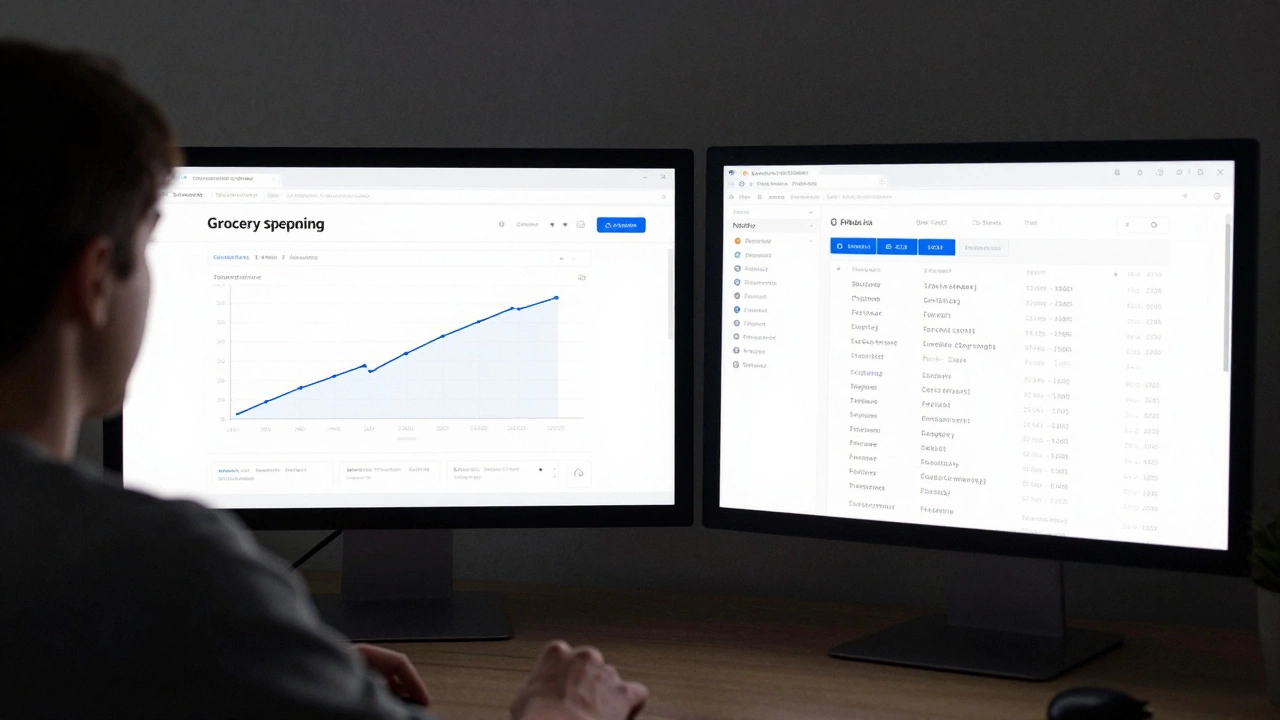
- Build one real project - Not a todo list. Not a calculator. Something that solves a real problem. Example: A script that scrapes local council meeting minutes and emails you updates. Or a tool that tracks your grocery spending and suggests cheaper brands.
- Put it on GitHub - Clean code. Good README. Clear instructions. If someone can’t run it in 5 minutes, it’s not good enough.
- Write about it - Blog post, LinkedIn article, even a Twitter thread. Explain what problem you solved, how you did it, and what you learned. This shows communication skills - which matter more than you think.
- Apply to 10 jobs a week - Target small companies, startups, or nonprofits. They care more about what you can do than where you studied.
Don’t wait until you "know everything." You’ll never be ready. Start applying after your first project. Most entry-level roles don’t require 2 years of experience - they just want someone who can learn fast and ship code.
What Won’t Work
Here’s what most people waste time on:
- Watching 50-hour Python tutorials without writing code.
- Doing 100 LeetCode problems just to "practice" - unless you’re targeting FAANG, this won’t help.
- Getting a certificate from a platform and thinking that’s enough.
- Trying to learn React, Node.js, and Java at the same time as Python.
These don’t build skills. They build illusions.
One guy in Sydney spent 8 months doing online courses. He had 7 certificates. He applied to 80 jobs. Got zero replies. Why? He had no portfolio. No GitHub. No real project. Just a list of things he "learned."
He started over. Built a simple tool that auto-sorted his PDF receipts. Posted it on GitHub. Wrote a short post about how it saved him 3 hours a week. Got an interview in 2 weeks. Got hired in 5.
Is Python the Best Language to Start With?
Yes - if you’re starting from zero. It’s readable. It’s forgiving. It’s used in real-world jobs. Unlike C++ or Java, you can write something useful in a weekend.
But here’s the catch: Python is not the end goal. It’s the starting point. Once you’re comfortable with Python, you’ll naturally want to learn more - SQL, Docker, APIs, cloud tools. That’s good. That’s progress.
Many people think they need to learn "everything." They don’t. They need to learn enough to solve one problem. Then another. Then another.
Can You Get a Job Without a Degree?
Yes. In Australia, more than 40% of entry-level tech roles now accept non-degree candidates, according to a 2025 survey by the Australian Digital Transformation Office. Companies like Canva, Atlassian, and countless startups hire based on skills - not diplomas.
What matters is:
- Can you write code that works?
- Can you explain it?
- Can you keep learning?
If you can answer yes to those, your resume doesn’t need a university name.
What’s the Salary Range?
In Australia, entry-level Python roles pay between AUD $65,000 and $85,000 per year. It depends on:
- Location (Melbourne and Sydney pay more than regional areas)
- Industry (finance and healthcare pay more than nonprofits)
- Your project quality (a strong portfolio can add 15-20% to your offer)
Don’t expect $120,000 as a beginner. That’s for senior roles with 5+ years of experience. But $70,000 is realistic - and it’s more than enough to live well in most Australian cities.
Where to Start Today
Here’s your 30-day plan:
- Day 1-5: Install Python and VS Code. Learn how to use Jupyter Notebook.
- Day 6-10: Learn Pandas. Clean a real dataset - try data.gov.au (Australian government data).
- Day 11-15: Build a small Flask app. Make a page that shows your latest weather data.
- Day 16-20: Learn basic SQL. Connect your Python script to a SQLite database.
- Day 21-25: Put everything on GitHub. Write a README that explains what it does.
- Day 26-30: Apply to 5 junior roles. Even if you don’t feel ready. You’ll learn more from rejection than perfection.
That’s it. No fancy bootcamp. No $10,000 course. Just 30 days of focused work.
Final Thought
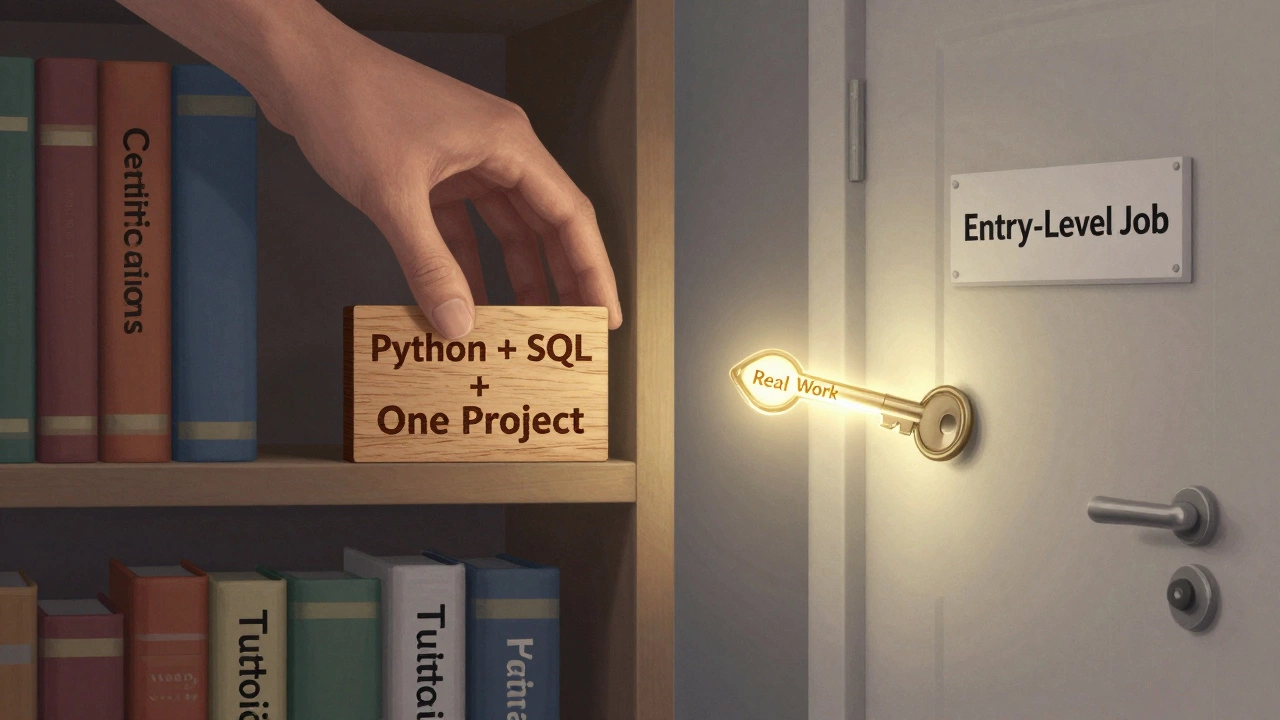
Python isn’t magic. But it’s a key. It opens doors - but you still have to walk through them. The job isn’t in the language. It’s in what you build with it.
Stop asking "Is Python enough?" Start asking: "What can I build with Python that someone will pay for?"
Can I get a job with Python if I’m over 30?
Absolutely. Age doesn’t matter in tech - skills do. Many people switch careers in their 30s, 40s, and even 50s. Companies need problem-solvers, not young coders. Focus on building real projects and showing you can learn. One woman in Adelaide started learning Python at 42. Two years later, she’s leading data automation for a health tech firm.
Do I need a computer science degree to use Python for a job?
No. Most Python jobs in Australia don’t require a CS degree. Employers care more about your GitHub, your project, and how you solve problems than your transcript. Bootcamps, online courses, and self-taught paths are all valid routes.
How long does it take to get a Python job?
With consistent effort, 3-6 months is realistic. If you code 1 hour a day, build one project, and apply weekly, you’ll likely land something by the end of 4 months. Rushing won’t help - but consistency will.
Is Python better than JavaScript for getting a job?
It depends on the job. JavaScript is king for front-end web roles. Python dominates in data, automation, and backend services. If you want to work with data, AI, or systems - Python wins. If you want to build websites with user interfaces, JavaScript is the way. Choose based on the kind of work you enjoy.
What if I can’t find a job after learning Python?
If you’ve built a project, put it on GitHub, applied to 20+ jobs, and still got no replies, revisit your project. Is it solving a real problem? Is your code clean? Can someone else use it? Many people fail because their projects are too basic. Try building something for a local business - even a small one. Offer to automate their spreadsheet. You’ll learn more in a week than in a month of tutorials.

Anirudh Vaidya
I am an education consultant specializing in the Indian education system, and I enjoy exploring innovative teaching methods. My passion is writing about educational reforms and developments happening in India, trying to bring awareness to global audiences. I regularly contribute to various educational journals and participate in conferences worldwide. I believe in lifelong learning and am always keen to exchange ideas with fellow educators.