Coding Class Cost Calculator
Find Your Personalized Cost Estimate
Answer these questions to see your estimated costs and recommended learning path
Want to learn to code but worried about the price? You’re not alone. In 2026, coding classes range from free to over $20,000 - and the cost isn’t just about the number on the tag. What you pay depends on how you learn, who you learn from, and what you want to do after. Let’s cut through the noise and break down exactly what you’ll actually pay.
Free Coding Classes: The Starting Point
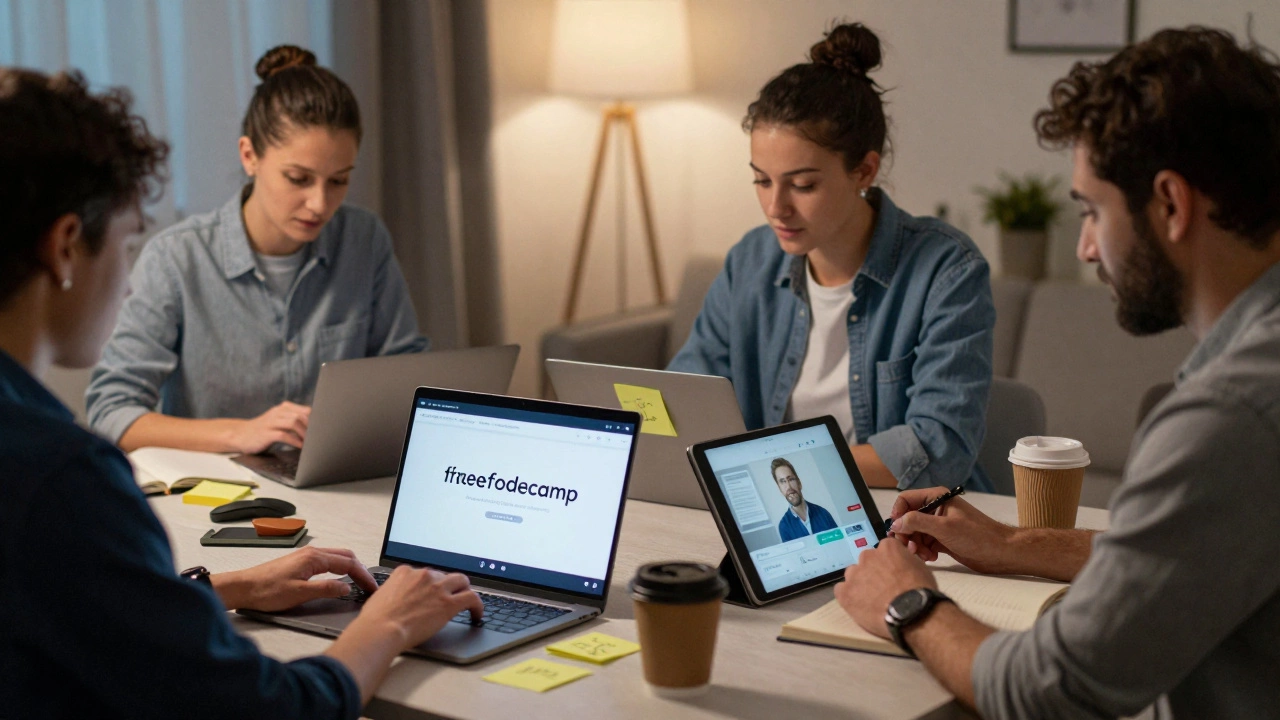
Yes, you can start coding for free. Platforms like freeCodeCamp, Khan Academy, and Codecademy’s free tier offer full beginner curriculums in HTML, CSS, JavaScript, and Python. These aren’t just snippets - they’re complete paths to building websites and simple apps. Many people land their first dev jobs after using only free resources.
But here’s the catch: free doesn’t mean easy. Without structured feedback, mentorship, or deadlines, over 80% of people who start free courses never finish. If you’re self-driven, have a clear goal, and can stick to a schedule, free is a powerful option. If you need accountability, you’ll likely need to invest.
Online Courses: $0-$500
Most paid online courses fall between $20 and $500. Think Udemy, Coursera, or Pluralsight. These are usually self-paced, pre-recorded classes with quizzes and downloadable projects. A solid full-stack course on Udemy might cost $15 during a sale, or $120 at full price. Coursera’s professional certificates - like Google’s IT Support or IBM Data Analytics - run $39-$79 per month, with most completed in 3-6 months.
These are great for learning a specific skill - like React or SQL - without committing to a long program. But they rarely include career coaching, resume reviews, or job placement. You’re on your own after the last video.
Coding Bootcamps: $8,000-$20,000
This is where most people start seeing serious investment. Coding bootcamps are immersive, usually lasting 8-24 weeks. They’re designed to turn beginners into job-ready developers in record time. Top programs like General Assembly, Flatiron School, or Le Wagon charge between $12,000 and $18,000 for full-time, in-person or live online courses.
What you get: daily mentorship, project reviews, portfolio building, and often a job guarantee. Many bootcamps offer income share agreements (ISAs) - you pay nothing upfront, then pay 10-15% of your first year’s salary if you land a job over $50,000. Some even refund your tuition if you don’t get hired within six months.
Bootcamps aren’t for everyone. They’re intense. You’ll work 40-60 hours a week. But for people who need structure and support, they’re one of the fastest paths into tech.
University Programs: $10,000-$50,000+
If you’re looking for a degree - associate’s, bachelor’s, or even a master’s in computer science - you’re looking at university prices. Public universities in Australia charge $10,000-$15,000 per year for domestic students. International students pay $30,000-$50,000 per year. A full four-year degree can cost over $200,000.
Is it worth it? For some, yes. A degree opens doors to government jobs, research roles, or companies with strict hiring policies. But for most coding jobs - especially in startups, agencies, or remote roles - employers care more about your portfolio than your diploma. You can build the same skills in a bootcamp for 10% of the cost.
Private Tutoring: -0 per hour
One-on-one coaching is the most personalized option. You can find tutors on platforms like Superprof or through local tech communities. Rates vary wildly: a university student might charge $50/hour, while a senior engineer from Google could charge $150.
This works best if you’re stuck on a specific problem - like debugging a Python script or understanding algorithms. It’s not meant to replace a full course. But if you’re learning slowly or need custom pacing, tutoring can save you months of frustration.
What You’re Really Paying For
It’s easy to compare prices and assume the most expensive option is best. But that’s not always true. Here’s what you’re actually buying:
- Time: Free courses take 6-12 months to complete. Bootcamps do it in 3-6 months.
- Support: Free = no help. Bootcamps = daily feedback from instructors.
- Network: Top bootcamps connect you with hiring partners like Atlassian, Canva, or Afterpay.
- Guarantees: Some programs refund your money if you don’t get hired.
- Speed to job: The average bootcamp grad lands a job in 4.5 months. Self-taught learners take 8-12 months.
Most people who pay $15,000 for a bootcamp aren’t paying for the curriculum - they’re paying for the structure, the community, and the job pipeline.
How to Decide What’s Right for You
Ask yourself these three questions:
- How much time can you commit per week?
- Do you need job placement help, or are you building a side project?
- Can you afford to go without income for a few months?
If you’re working full-time and just want to learn Python for automation - start with a $30 Udemy course. If you’re quitting your job to switch careers - a bootcamp with an ISA might be the smartest move. If you’re a student with no savings - use free resources and build a portfolio for six months before applying.

Hidden Costs to Watch For
Most people forget about the extras:
- Hardware: You’ll need a laptop that can run code editors and virtual machines. Budget $800-$1,200 if you don’t already have one.
- Internet: A stable connection is non-negotiable. No buffering during live classes.
- Software: Some courses require paid tools like GitHub Pro ($4/month) or Figma ($12/month). Most are free for students.
- Networking: Attending meetups, conferences, or hackathons costs money. Look for free local events - Melbourne has a strong tech scene.
These aren’t course fees - but they’re part of the total cost of learning to code.
Where to Find Discounts and Aid
Many programs offer:
- Student discounts (up to 50% off)
- Scholarships for women, Indigenous Australians, or people from low-income backgrounds
- Payment plans (pay in 6-12 monthly installments)
- Government subsidies - check Skills First in Victoria for eligible courses
Don’t assume you can’t afford it. Ask. Many bootcamps have hidden funds for people who need help.
Is It Worth It?
In 2026, the average entry-level developer salary in Australia is $78,000. A bootcamp graduate who paid $15,000 breaks even in under five months. Even if you start at $60,000, you’ll make back your investment in under a year.
But money isn’t the only return. Coding opens doors to remote work, freelance gigs, and career flexibility. You’re not just learning a skill - you’re unlocking a new way to earn.
Are free coding classes enough to get a job?
Yes - but only if you go beyond the course. Free resources teach you syntax, but employers want to see projects. Build 3-5 real apps, put them on GitHub, and write about how you solved problems. Many self-taught developers land jobs by showing initiative, not certificates.
Do coding bootcamps really guarantee jobs?
Some do - but read the fine print. A "job guarantee" usually means you get a refund if you don’t land a job paying over $50,000 within six months. It doesn’t mean they’ll find you a job. You still need to interview well, build a portfolio, and network. The bootcamp gives you tools - you still have to use them.
Is it better to learn Python or JavaScript first?
Start with JavaScript if you want to build websites or work in startups. Start with Python if you’re interested in data, automation, or AI. Both are beginner-friendly. JavaScript is more in-demand for front-end roles, while Python dominates in backend, science, and scripting. Pick based on what kind of apps excite you.
Can I learn coding while working full-time?
Absolutely. Many people do. Choose self-paced courses or part-time bootcamps that meet 2-3 evenings a week. Aim for 10-15 hours per week. It takes 6-12 months, but you won’t have to quit your job. The key is consistency - even 30 minutes a day adds up.
What’s the cheapest way to start coding?
Use freeCodeCamp or The Odin Project. Both are 100% free, open-source, and project-based. You’ll build a portfolio as you go. Pair it with YouTube tutorials for explanations. Join local coding meetups - Melbourne has free events almost every week. Total cost? $0. Time? 6-12 months. But it works.

Anirudh Vaidya
I am an education consultant specializing in the Indian education system, and I enjoy exploring innovative teaching methods. My passion is writing about educational reforms and developments happening in India, trying to bring awareness to global audiences. I regularly contribute to various educational journals and participate in conferences worldwide. I believe in lifelong learning and am always keen to exchange ideas with fellow educators.